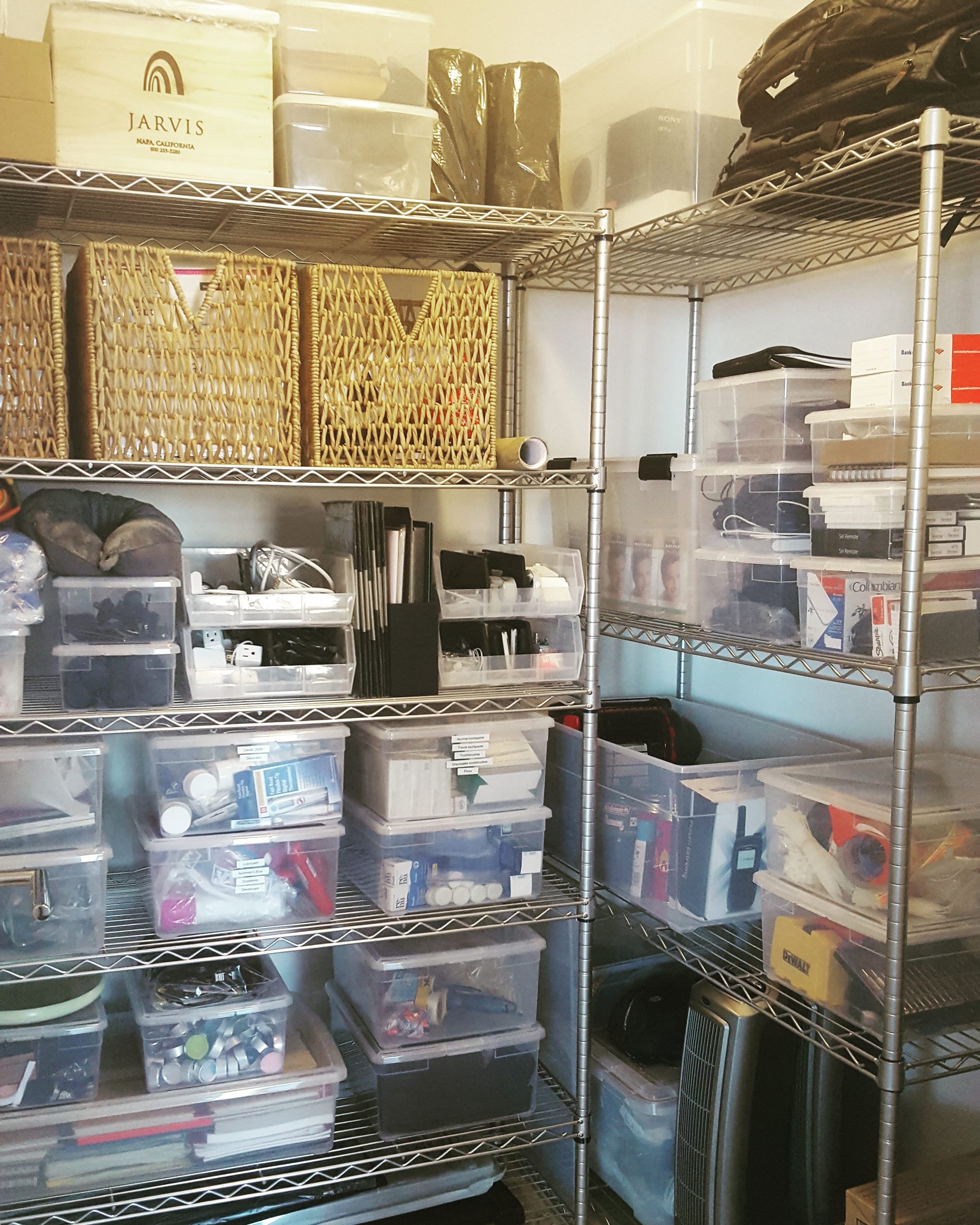
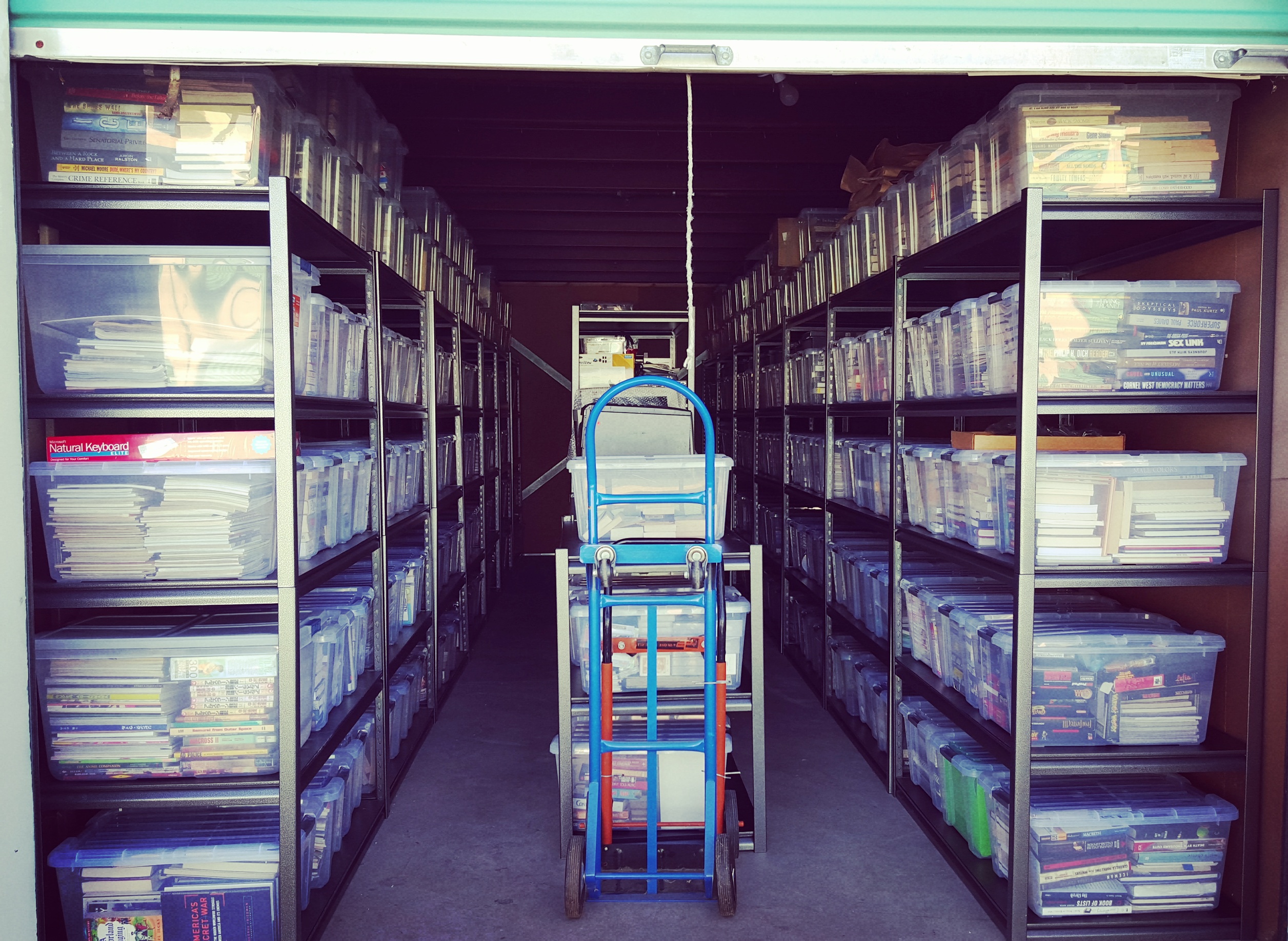
The work I do as a professional organizer is all about smart and safe storage. I consult on and implement day to day storage for:
Immediate (daily) access – such as the kitchen cabinets, wardrobe closets, paperwork file cabinets
Short term storage – garage, shed, or other residential on-site storage that needs to be occasionally accessed (and sometimes turns into long-term storage)
Long-term storage – off-site public and private storage units, vaults, pods, etc. that will rarely be accessed
Here we will focus on downsizing anything stored that is rarely or never used, maximizing space for things you need to keep, and tips to prevent damage to long-term storage and things you love.
Downsizing Tips
Three Steps to Downsize & Minimize Storage
1. Make a declutter plan and stick to it. Set a solid schedule of purging sessions weekly or monthly (in the home), quarterly or bi-annually (in the garage/attic/basement), and bi-annually or annually (at storage unit). If downsizing in preparation for a move, start the process a few weeks to months before your move date. How far in advance you begin depends on how much free time you have and things you own. Work your way into closets, deep inside cabinets and drawers, under the bed, and through closets and boxes that have been ignored for too long. Pull out what you don’t need/like/use/wear, and place it into a donation/sell/give away box or bag. It’s a good idea to always have this kind of bag or box around the house to remind yourself to declutter. A little weekly and monthly decluttering goes a long way.
2. Let go of the easy stuff first. Leave the time consumers and things you are emotionally attached to for last. For many people the more challenging stuff to tackle is often paperwork, photos, and memorabilia. Put the challenging stuff aside and return to them later, after you deal with easier things and are inspired by the open space to continue moving forward.
3. Recruit a trusted friend. If it’s overwhelming for you to tackle a downsize project on your own, ask for help. Whether you call on a trusted friend, neighbor, or an experienced professional organizer, it’s important that this person have a patient and non-judgmental personality. Downsizing is a team effort. Choose someone you like that will keep you motivated to stay on schedule and moving forward. Bonus points if this person has a truck or van to help haul away donations.
Tackle downsizing a little at a time for a healthier experience, and learn to become comfortable with the process of letting go…it truly has a lasting effect and higher rate of success in moving toward a clutter-free lifestyle.
Maximize Storage Space: Think Vertically
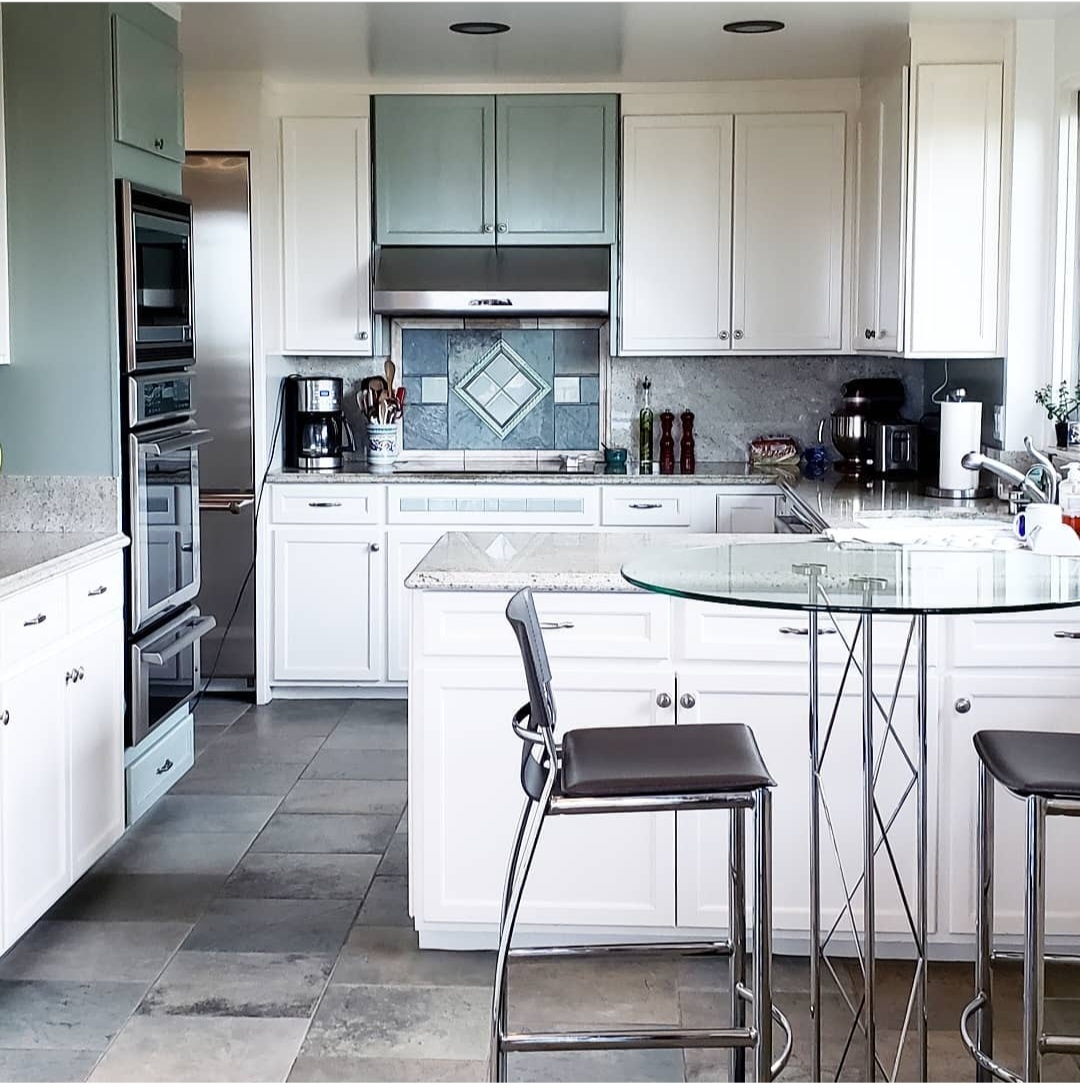
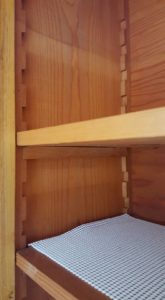
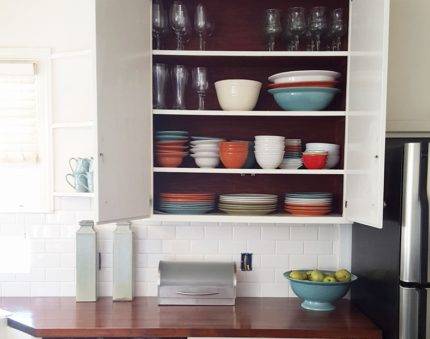
Adjustable, built-in kitchen cabinet shelves.
Large, empty walls are valuable real estate. Consider maximizing use of these spaces first when planning built-in and shelf-standing storage shelves, cabinetry, and wardrobe closets.
Use high quality, sturdy shelf and cabinet systems that don’t damage easily when moving from one home or storage space to another. These will likely be with you for the long-haul, so make sure the shelves are functional and pleasing to have around.
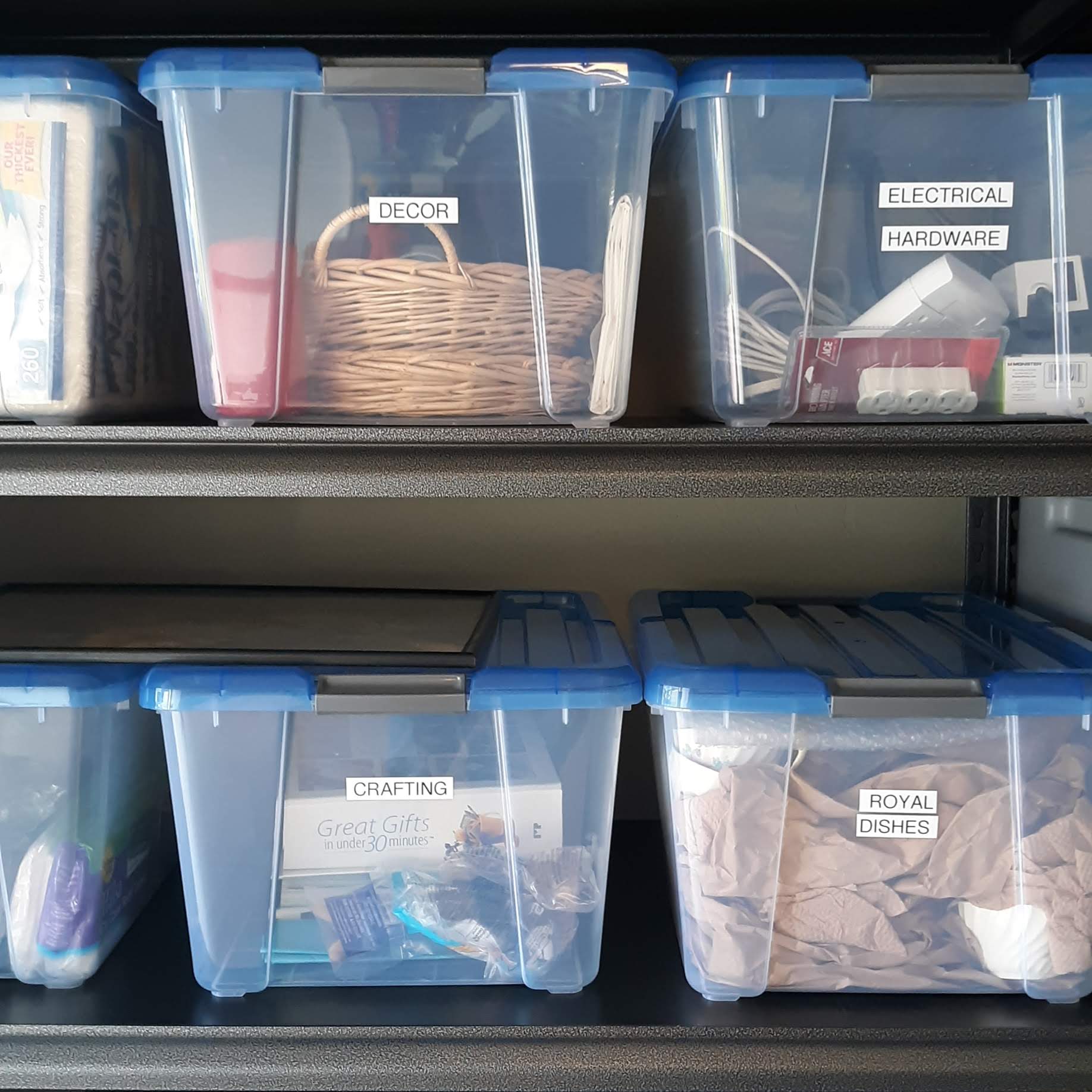
Invest in secure bins and containers with flat lids for easy stacking. Make sure water cannot penetrate the base or lid of containers that will be stored in a garage, attic, basement, or off-site storage unit if there happens to be flooding or a leak in the roof, which often happens after a big rain.
Adjustable shelving is a life saver – in kitchen cabinets, built-in cabinet systems, bookshelves, garage shelving.
Use hooks to hang and suspend items in cabinets, closets, garages, and workspaces.
Use shelf risers to maximize space that doesn’t have adjustable shelving. They work great for lots of areas, not just kitchens!
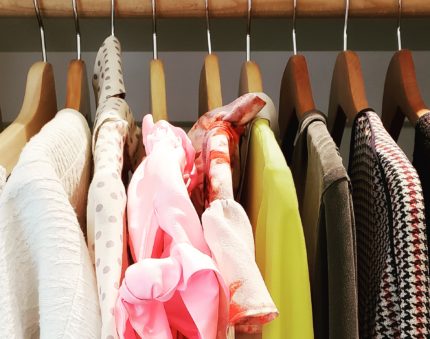
Hang dresses, blouses, shirts, and tanks using slim hangers whenever possible. This uses space more efficiently than folding and prevents wrinkled clothing. Fold or use cascading pant/skirt hangers for bottoms. More on hangers here.
Tips for Safe Storage
Climate control – At home or in a storage unit, your valuables do best when not exposed to humidity and fluctuating temperatures. Cold, wet weather can create dampness, mold, and rot, and extreme hot temperatures can melt, crack, and warp. Climate-control keeps indoor temperature between 55-85°F year-round, maintains a consistent humidity level, and is a storage necessity’ it’s a heater, air conditioner, humidifier, and dehumidifier all in one. Storing wine? The ideal storage temperature range is between 45° F and 65° F. Read more about wine storage here.
Keep a clean Garage/Basement/Attic – Finished (with drywall and insulation) or unfinished (without drywall and insulation), it’s important to keep storage areas dry, dusted, and swept. Clear spiderwebs immediately, and keep things off the floor because rodents and other critters love to nest under piles.
Wrap and label stored furniture in clean moving blankets. You can use plastic movers wrap (easily found at Uhaul Stores) to secure the blankets into place, but never use plastic to completely cover a piece of furniture for long term storage, as condensation can build up in space with fluctuating temperatures, and cause damage. Blankets also keep your furniture dirt and dust-free, and prevents scratches and damage when stacked in storage.
Clean/vacuum rugs, then roll and wrap in heavy paper or canvas cloth. Never fold rugs because permanent creases can result. Never use plastic (such as movers wrap) for long-term storage without temperature control, as this can cause condensation and damage the rug. Rugs need to breathe, especially those made with expensive, natural fibers such as wool. Keep rugs stored off the ground whenever possible to prevent damage from leaks and floor-scurrying critters.
Acid-free containers/paper/portfolio binders work great for photos, important paperwork (such as house deeds and birth certificates), and flat artwork (charcoal sketches, watercolor, oils, and acrylics, etc).
Cedar balls and blocks protect against moths.
Always place a few rodent traps in long-term storage spaces.
Be sure to regularly check on items stored in the garage, attic, basement, shed, or an off-site storage unit in case of leaks and damage, especially during or immediately after a heavy rain or snow storm.
Book Recommendation: The Stuff Cure – a proven method to unstuff your excess, organize what you keep, and regain control of your life.
Isabella Guajardo, founder and owner of Bella Organizing, is a San Francisco Bay Area professional organizer offering home organizing and residential packing and move management services throughout the Greater San Francisco Bay Area.
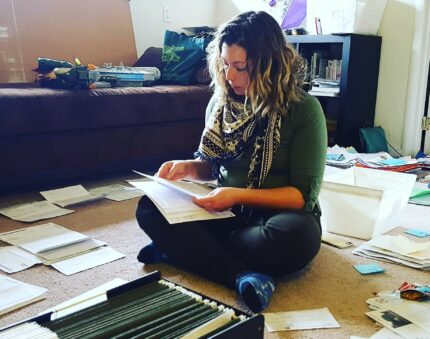
Paperwork organizing can be challenging, but it doesn’t have to be. Take control of paperwork and deal with it as soon as you walk in the door.
For today’s paper decluttering task, choose paperwork that challenges you most, the stuff you’ve been holding off on for a while and letting pile up. You don’t need to worry about organizing it to perfection today, the goal for the day is declutter – GET RID OF – what has no business in your home. And after today, don’t let it enter your life again.
Here’s How
Recycle paperwork as soon as you enter the house with it. Go straight to the recycle bin and drop in whatever you don’t need. Toss in that junk mail. Open mail and immediately recycle envelopes and inserts, this way you filter out most paper clutter before it hits a surface.
Immediately place bills and correspondence on a designated work area, such as you desk or a command center you work at regularly, instead of on the kitchen or living room table. Is the kitchen or living room your work area? Oi vey! Work on creating an alternative paperwork space if your goal is to keep these areas free of paper clutter.
I’m concerned about my name and address going into the recycle bin, so I tear off and shred it. I also have an identity theft protection rubber stamp that I use at my desk, like this one pictured from Solutions.com ~ you can also get it on Amazon. Or simply use a black marker.
Identity Theft Protection Stamp
If you receive a lot of junk paper, go a step further and have Catalog Choice or Paper Karma get you off mailing lists. You’ll receive less paper mail, which means less clutter to deal with later.
How I handle paperwork at Casa Bella.
Each day I sit at my desk for 15 minutes and file away what little I actually need to keep and shred or recycle the rest. 15 minutes per day works miracles!
I use a cork board on the wall in front of my desk to pin small notes and important reminders. I take down and recycle weekly anything that no longer applies. Here’s an example of a cute DIY cork board from Apartment Therapy, with a link to how to make one yourself.
DIY Corkboard from Apartment
Get it off the desk, but don’t let bills and important correspondence get out of sight, out of mind. Create a neat place where you can see and access bills daily, such as standing upright in a desktop file folder, or pinned to a cork board on the wall by your work area. Highlight or circle due dates on bills.
Desktop file holder from Containerstore.com
It’s a good idea to keep
Adoption paperwork, birth certificates, marriage license, divorce documents
Car titles, repair and maintenance receipts.
Personal identification, social security statements.
Educational degrees and certifications.
Home improvement paperwork and receipts.
Insurance documents for current policies.
Medical receipts and reports.
Warranties and manuals you cannot find online.
Receipts for high value home or office furniture, computers, electronic equipment, household goods, art, anything you may one day want to sell or may need for value reference in the case of a home or renters insurance claim.
If you’re holding onto department store receipts in case you need to make a return, and the return date is expired, do you still need to keep the receipt? Probably not.
Tax documents. When the year is up and it does not need to live in my active files, I store tax documents with that years tax return in a closet designated specifically for this kind of storage.
More ways to prevent paper pile up
Go paperless wherever you can. NOW is the time. Get online and learn how to receive statements, bills and receipts via email. Learn how easy it is to download and store them on your computer as a digital document. If you ever need a paper copy, simply print from your digital storage file. Banks allow you to log onto your account and glance at your statements from years back. So convenient! Consider going paperless with one or two minor bills. If this works for you, do more. A little at a time steadily builds great paperless bill-paying habits.
Don’t sign up for notices and special offers via paper mail. When ordering online, do not check boxes that allow the business to send you paper mailings. It’s easier to remove yourself from email than mailing lists.
Download the Stop Junk Mail Kit created by the Bay Area Recycling Outreach Coalition for numbers to call and websites to visit to be removed from Direct Marketing lists, Credit Card offer lists, Sweepstakes, Shopping Flyers, Junk Faxes, Catalogs and more.
We have individual needs to consider when it comes to dealing with paperwork. For this reason, I suggest consulting with your CPA or legal advisor about what you should be keeping vs. recycling. From my own home office and that of clients I have worked with over the years, what I have found is this: we are quite more similar than different. So do not feel alone with your paper clutter. Deal with it at least 15 minutes a day. If you’re not going to hire a professional organizer or personal assistant to come in weekly and do it for you, learning to self-maintain is key. Like good habits, getting organized with paperwork is something that can be learned.
Isabella Guajardo, founder and owner of Bella Organizing, is a San Francisco Bay Area professional organizer offering home organizing, interior redesign, and residential move management services throughout the Greater San Francisco Bay Area. Call (510) 229-7321 or email info@bellaorganizing.com for more information. Gift certificates are available.
My boy Newton. He owns and loves but a few simple toy, but we have the most fun hiking together in the East Bay Regional Park hills.
Getting organized doesn’t happen overnight.
It’s a process or a “lifestyle change” that develops and improves over time. The more action you take toward an organized lifestyle, the more time you will have for family, friends, hobbies, life goals, and yourself. With faithful practice, you will become more organized. Here are six simple steps to get you started:
Pick a zone
Make a list
Sort like items
Give Away/Sell/Donate
Organize
Congratulate yourself
1. Pick a zone.
Choose a room or area of that room where with a little decluttering and organizing you will get instant gratification. Don’t try to tackle the entire garage or house in one day…stick with a SMALL area of one room, such as one small closet or cabinet. Focus on getting this area completely organized just the way you want it. The positive feeling of SUCCESS helps to keep us moving toward our goals.
2. Make a list.
Prioritize projects to complete within that zone before moving on to another (1., 2., 3., etc.). For example, if decluttering and organizing a pantry:
Pull out and compost old and expired food
Wipe down shelves with a cleaning solution
Arrange food into categories
Make a list of food that needs to be replaced and/or organizing supplies to pick up that will help streamline the pantry.
3. Sort like items.
Do you have multiples of something you prefer to store in this zone in different areas around the house? Bring them together. Don’t stray too far! Stick with organizing this zone. Finding things that don’t belong here? Put them in a pile and find them a home later or drop them off in the general area that *should* be their home and leave them there for now. You’ll fine tune later. Get back to sorting your priority zone. Do a little dusting while here.
4. Give Away/Sell/Donate.
Gather paper or plastic grocery or trash bags, cardboard Amazon or moving boxes, and label them accordingly for Give Away, Sell, and Donate. Fill them with things found in this zone that you want to bestow upon someone you know and love (Give Away), things you would like to make money back on (Sell) and things you don’t want that aren’t worth the time to sell but still have a little life in them (Donate). Place a Recycle and Trash bin or bag nearby, in case you come across this stuff in the process. #4 is an optional but very important step to de-cluttering and downsizing.
5. Organize.
Place items where it makes the most sense to you. Should everything in this zone be tidied up and left here or taken somewhere else in the house where it makes more sense to be? Did you find keys that should instead hang on a hook by the door, or go in a specific drawer in the kitchen? Did you happen upon a set of winter gloves that should go into a drawer in your dresser, or into each jacket pocket so they are instantly there when you need them? (I leave mine in my jackets and LOVE always finding them there.)
6. Congratulate yourself for coming this far.
Great job! You completed organizing a zone. Now set up a date with yourself to tackle another zone and add to the accomplishments.
Isabella Guajardo has provided professional home organizing and residential move management services to hundreds of individuals and families from all walks of life including single parents, school teachers, college professors, lawyers, doctors, Pulitzer Prize winners, and CEOs of Fortune 500 companies. The thing 90% of them have in common? Too much stuff they were ready to downsize. Bella Organizing helps you to tackle and reach your declutter and organizing goals.
Call (510) 229-7321 to schedule a complimentary telephone consultation.
I do a lot of closet organizing and see a variety of home made and professional installation systems. Even the biggest and most well-designed closets can have organizational problems. What if you have a tiny closet or simply too many clothes like most of us? A quick and easy fix-it starts with analyzing the type of hangers you are using.
We accumulate a variety of hangers over time: colorful plastic tubes, bulky wood, padded sweater and metal dry cleaning hangers are common.
Tube hangers are sturdy, inexpensive, easy to acquire, and are used for just about everything: blouses, t-shirts, sweaters, dresses, folded over pants and skirts. If you have collected a variety of these colorful hangers…beware! It makes the closet look messy and clothes tend to slide off their smooth surface. Plastic is a material I suggest be phased out of the home whenever possible, and considered primarily for garage, attic and basement storage containers, and areas where liquids can spill and permanently damage the container. If you already have or prefer plastic tube hangers, use the same size and color for visual consistency; this alone will make the closet look and feel more organized.
Padded sweater hangers are meant to prevent stretching at the shoulders, but I have witnessed stretching on them anyway. These hangers also take up a lot of space and can be difficult to slide across a hanging bar when searching through the closet. The key to preventing hangers from stretching sweaters at the shoulder is to 1) wear them regularly, and/or 2) fold and stack sweaters instead of hanging.
Wood hangers are good to use if you have the space. Whatever material they are made of, consistently sized, shaped and colored hangers give the closet a sleek and minimalist look and feel.
Wooden hangers look nice, are sturdy, and one of the natural materials I prefer for the home. They work best for large and heavier clothing, suits and jackets in a hallway entry closet, but tend to use up too much space in a wardrobe closet. Stick with slimmer hangers where you can.
What about dry cleaner hangers? Why bother transferring clothes onto regular hangers when they are already hung when picked up from the cleaners? Dry cleaner hangers are slim and sleek, therefore take up little space…as long as they don’t bend and tweak out of shape. If you wear the same dry-cleaned clothes every week it makes sense to consider using them as your regular hangers (please at least remove the plastic bag covers!) If your clothes will be hanging for a while, transfer them onto better hangers, for safe storage and aesthetics. Otherwise, your clothes may lose their shape quicker. Typical dry cleaner hangers also bend out of shape quickly and snag other clothing.
Slim hangers of the same size and color give the closet a sleek, minimalist look and feel. The ones I like to use have a velvety finish, chrome or nickel hooks, and a good shape to the shoulders, which helps keep clothes from stretching and slipping to the floor. They work well for most lightweight shirts, blouses, and tanks, and are almost completely flat allowing you to hang many items close together, creating space where there was none.
Here is a similarly slim hanger made of a rubber material which I prefer for extra large and heavy men and women’s clothing. They work well for coats and jackets, too:
Cascading hangers with clips further maximize space. They allow pants and skirts to hang their full length, keeping them wrinkle free. The ones shown here have a small hook to hang them on one another, allowing you to maximize vertical space. These hangers keep their shape over time and can hold a lot of weight without collapsing, unlike plastic tube and dry cleaner hangers.
Do you or your partner have neck ties that need proper hanging? See my quick video below where I demonstrate one of my favorite tie hangers and how to use it.
Choosing the right hangers can create space where you did not know you had it. Slim hangers, wooden hangers, and cascading pant and skirt hangers are great choices for streamlining your wardrobe closets for function and aesthetics. Maximize space by adjusting the type of hangers you have; it is an easy and inexpensive way of making the most of a small closet without sacrificing style or durability.
____
Ready for more? Call (510) 229-7321 today to schedule a complimentary estimate for your closet and wardrobe organizing goals. Gift certificates are available.
What if making your home feel calmer, warmer, and more connected to nature did not require knocking down walls, buying expensive furniture, or starting a major renovation?
That is the beauty of biophilic home design.
Biophilic design is about creating a stronger connection between your home and the natural world. It can include natural light, plants, organic shapes, natural textures, earthy colors, fresh air, and materials that remind us of the outdoors.
But here is the part many overlook: you do not need to completely redesign your home to enjoy the benefits of biophilic design.
What Does Biophilic Design Actually Mean?
The word “biophilic” refers to our natural connection with living things and the environment around us. In a home, this can mean creating spaces that feel more natural, comfortable, peaceful, and inviting.
Think about what makes you feel good when you are outdoors. Natural light. Fresh air. Greenery. Soft natural fabrics. Open space. Plants. Views outside. A peaceful place to sit.
Now think about how you can bring more of those qualities into the way your home is arranged and the materials you choose for your organizing supplies.
That is where Bella Organizing comes in.
2-Hour Biophilic Design Consultation
Want your home to feel more natural, peaceful, and inviting?
Our 2-Hour Biophilic Design Consultation helps you transform your existing space by working with what you already have and guiding you toward intentional shopping choices that bring nature, beauty, and a sense of calm into your home.
During the consultation, we’ll explore simple ways to improve your space through furniture placement, decluttering, natural light, plants, natural textures, and the thoughtful arrangement of your belongings.
Choose an in-home consultation for hands-on guidance in your space, or meet with Isabella Guajardo online for convenient design and organizing recommendations from wherever you are.
We also offer: ✔️ Pack/Unpack/Organize Move Management Services
As seen in: 🌟 San Francisco Magazine 🌟 Pop Sugar 🌟 San Jose Mercury News 🌟 Carmel Magazine 🌟 Monterey County Herald 🌟 Avance Hispano 🌟 2022 Winner of Oakland Magazines Top Five House Cleaning Services
Discover our services and see our portfolio at bellaorganizing.com or call (510) 229-7321 for more information.
An independently-run woman and POC-owned business serving the greater San Francisco Bay Area & Monterey Peninsula since 2007.
🌟 Sort books by size 🌟 Place largest books flat on the bottom, smaller books on top 🌟 Place books upright only to fill gaps on the sides as needed 🌟 Use crumpled packing paper to fill remaining gaps and ensure a firm top of box. 🌟 Tape securely 🌟 Label the contents
Book boxes are HEAVY…30-40lbs – depending on if they’re paperback or hardcover, and that’s if you use a small book box like the one here. You should only ever place books in a small book box, nothing larger. Why? It’s too heavy! The box can damage other boxes and severely damage your back trying to move it.
Have fun packing! Or call us to do it. We’re pros 😎 (510) 229-7321.
Bella Organizing collaborated with Redfin Realty and other cleaning and organizing experts to bring you Spring cleaning tips.
As the days grow longer and the weather begins to warm, we start to see the first signs of spring in the air. If you live in New York, Portland, or anywhere in between, the signs of spring are the same – the flowers begin to bloom and the birds are chirping again. After all, spring is the season of new beginnings, so why not refresh your home with spring cleaning? Declutter and deep clean the interior and exterior of your home before spring has sprung with these expert tips. Read more…