Categories
Professional-Organizer

Declutter the Linen Closet

declutter

1. to remove mess or clutter from (a place).

2. to organize and prioritize (one’s commitments, material possessions, etc.)

3. to let go

Declutter First, Organize Next. 

Pulling out what you no longer want is key to creating space and will make the organizing process smoother. Whether it’s clothing from a hanger, shoes from a rack, books from a shelf, paper from a filing cabinet, or toys from a bin, it’s time to make decisions on the things you are ready to let go. Focus first on decluttering. When the unwanted is out of the way, begin cleaning and organizing.  

Step One – Declutter the Linen Closet

  • Prepare a large, clean, and comfortable surface on which to work and fold. Avoid bending down and putting things on the floor and on surfaces where linens can pick up dust or animal hair. A clean bed, sofa, or dining table will do.
  • Have on hand plenty of trash bags for donations.
  • Prep a bottle of all-purpose cleaner or mild soap, and a clean sponge or rag.
  • Open the linen closet and take a few “before” photos.
  • Remove ALL linens from the closet. Sort like with like as you take them out: Bath towels, hand towels, sheets, duvets, comforters, pillows, dish towels, beach towels, etc.
  • Once sorted, you will know how much of each there are and which sets are matching or missing pieces. This is an important step toward LETTING GO. It’s easier to say goodbye to the old, worn, mismatched, and unwanted if you know there will be enough left to survive.

Allow yourself to let go and help others in need. Shelters always need old towels and small blankets for their ongoing intake and care for animals. You can also drop linens off at a homeless shelter or charity organization of your choice. Shelters accept new and used towel donations year around.

Step Two – Clean

  • Wipe the empty linen closet surfaces and walls with a wet and warm, soapy cloth. Regular cleaning will keep closets and cabinets in good condition. Allow surface to dry completely before putting things away.

Step Three – Fold & Organize
  • There are many great ways to fold towels and linens. Visit these Youtube “how to” videos to see my favorites. 1) Unique towel folding, 2) How to fold a fitted sheet, 3) Types of sheets and how to fold sets together
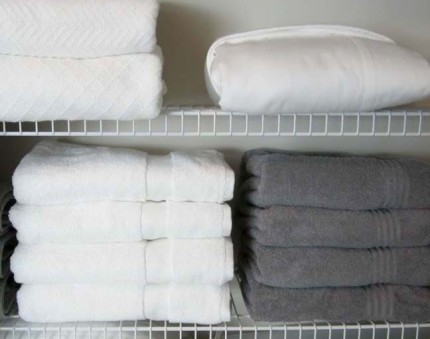
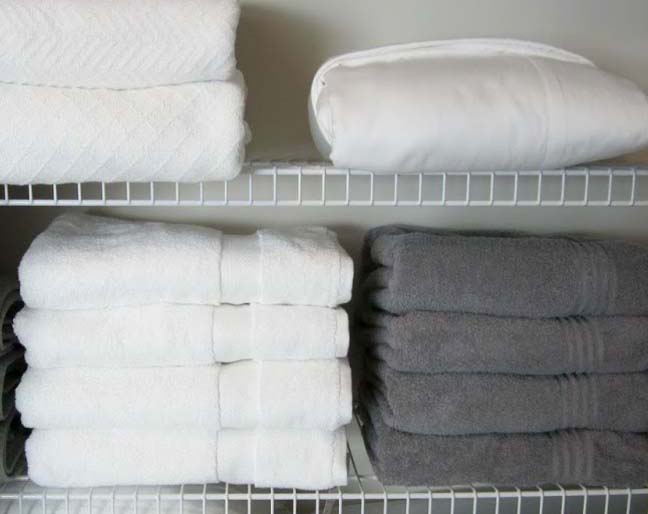
  • When folding towels, sheets, and blankets, consider the width, height, and depth of the area they are going back into. Fold in a way that allows the linens a bit of space between each other once stacked on a closet shelf (see above photo.) Room to breathe!
  • Put like items together (towels, sheet sets, blankets, etc.)
  • Take an “After” photo of your organized linen closet.

Bella_Organizing_Best_Professional_Organizers_San_Francisco_Oakland_Berkeley_silicon_valley_monterey

Isabella Guajardo, founder and owner of Bella Organizing, is a San Francisco Bay Area professional organizer offering home organizing and residential move management services throughout the Greater San Francisco Bay Area. Call (510) 229-7321 or email info@bellaorganizing.com for more information. Gift certificates are available.
Categories
Professional-Organizer

Closet organizing made simple – maximize your space with better hangers

How to Use Skirt/Pant Hangers

I do a lot of closet organizing and see a variety of home made and professional installation systems. Even the biggest and most well-designed closets can have organizational problems. What if you have a tiny closet or simply too many clothes like most of us? A quick and easy fix-it starts with analyzing the type of hangers you are using.

We accumulate a variety of  hangers over time: colorful plastic tubes, bulky wood, padded sweater and metal dry cleaning hangers are common.

Tube hangers are sturdy, inexpensive, easy to acquire, and are used for just about everything: blouses, t-shirts, sweaters, dresses, folded over pants and skirts. If you have collected a variety of these colorful hangers…beware! It makes the closet look messy and clothes tend to slide off their smooth surface. Plastic is a material I suggest be phased out of the home whenever possible, and considered primarily for garage, attic and basement storage containers, and areas where liquids can spill and permanently damage the container. If you already have or prefer plastic tube hangers, use the same size and color for visual consistency; this alone will make the closet look and feel more organized.

Padded sweater hangers are meant to prevent stretching at the shoulders, but I have witnessed stretching on them anyway. These hangers also take up a lot of space and can be difficult to slide across a hanging bar when searching through the closet. The key to preventing hangers from stretching sweaters at the shoulder is to 1) wear them regularly, and/or 2) fold and stack sweaters instead of hanging.

Organize My Closet
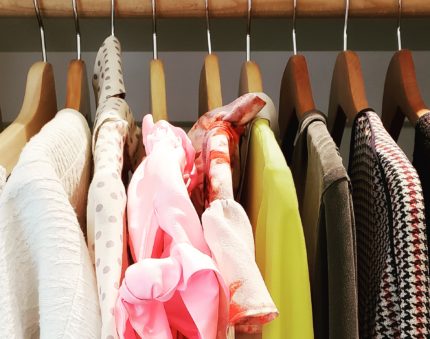
Wood hangers are good to use if you have the space. Whatever material they are made of, consistently sized, shaped and colored hangers give the closet a sleek and minimalist look and feel.

Wooden hangers look nice, are sturdy, and one of the natural materials I prefer for the home. They work best for large and heavier clothing, suits and jackets in a hallway entry closet, but tend to use up too much space in a wardrobe closet. Stick with slimmer hangers where you can.

What about dry cleaner hangers? Why bother transferring clothes onto regular hangers when they are already hung when picked up from the cleaners? Dry cleaner hangers are slim and sleek, therefore take up little space…as long as they don’t bend and tweak out of shape. If you wear the same dry-cleaned clothes every week it makes sense to consider using them as your regular hangers (please at least remove the plastic bag covers!) If your clothes will be hanging for a while, transfer them onto better hangers, for safe storage and aesthetics. Otherwise, your clothes may lose their shape quicker. Typical dry cleaner hangers also bend out of shape quickly and snag other clothing.

Slim hangers of the same size and color give the closet a sleek, minimalist look and feel. The ones I like to use have a velvety finish, chrome or nickel hooks, and a good shape to the shoulders, which helps keep clothes from stretching and slipping to the floor. They work well for most lightweight shirts, blouses, and tanks, and are almost completely flat allowing you to hang many items close together, creating space where there was none.

Here is a similarly slim hanger made of a rubber material which I prefer for extra large and heavy men and women’s clothing. They work well for coats and jackets, too:

Cascading hangers with clips further maximize space. They allow pants and skirts to hang their full length, keeping them wrinkle free. The ones shown here have a small hook to hang them on one another, allowing you to maximize vertical space. These hangers keep their shape over time and can hold a lot of weight without collapsing, unlike plastic tube and dry cleaner hangers.

Do you or your partner have neck ties that need proper hanging? See my quick video below where I demonstrate one of my favorite tie hangers and how to use it.

Choosing the right hangers can create space where you did not know you had it. Slim hangers, wooden hangers, and cascading pant and skirt hangers are great choices for streamlining your wardrobe closets for function and aesthetics. Maximize space by adjusting the type of hangers you have; it is an easy and inexpensive way of making the most of a small closet without sacrificing style or durability.

____

Ready for more? Call (510) 229-7321 today to schedule a complimentary estimate for your closet and wardrobe organizing goals. Gift certificates are available.

Keep up with Bella Organizing on Facebook and Instagram.

How to Use A Tie Hanger