Categories
Professional-Organizer

Getting Ready for Winter: Wardrobe Organizing Tips for Cold Weather

When it’s time to get organized for the changing season…

scarves_declutter_decluttering_organize_bella
Roll scarves and place them in a hanging bin, basket, or drawer for easy access.

If you’re like most of us and have limited closet space, you may need to store seasonal clothing. In preparation for cold weather, you might consider storing away the summery things and bringing out what you’ll need to stay warm and comfortable. It’s also a good time to purge.

Purging Tips

Say “goodbye” to clothing, shoes, and accessories when:

  • You have worn or used it to the point of fading, pilling, stains, stretching, or tearing
  • You have not worn or used it for an entire year or two
  • It is no longer your color, size, or style

 How to store off-season items.

  • Use containers with lids or large storage bags; cover to protect from dust, dirt, fluctuating temperatures, and little critters.
  • Treat them well. Clean, de-wrinkle, and fold or nicely hang before storing. Cared for clothing lasts longer, takes up less space, and can be worn immediately when it’s time.
  • Store items in a temperature-controlled environment, particularly natural materials such as leather, wool, and silk. Never store clothing in damp places that tend to breed mold or mildew, nor in extreme hot or cold temperatures.
  • Label bins or bags with a description of contents and store under the bed, high on a top shelf, in the guest room closet, on a garage shelf, or on a covered rolling rack.

Keep sweaters, jackets, scarves, warm hats & socks, cozy boots, gloves, and an umbrella within reach.

  • Sweaters keep their shape best when folded and stacked in dresser drawers or on reachable shelves. Lightweight sweaters do well hung as long as you wear often enough to retain their shape.
  • Roll winter scarves and place in a slim hanging canvas organizer  in the entry closet (which I also like for small purses, hats & beanies, gloves, compact umbrellas, and other accessories,) or stack them in a dresser drawer or bin on a shelf.
  • Keep gloves close to scarves or within coat pockets. I buy several sets of $1 gloves at CVS or Target and store a pair in the pocket of each jacket. They’re always there when I need them.
  • Keep long socks, thermal underwear, and cold-weather leggings together. More tips to organize tights, leggings, and long socks here.

Take the time to organize your closet and wardrobe for the changing season, and you’ll have what you need in a cold-weather flash.

____

Ready for more? Call (510) 229-7321 today to schedule a complimentary estimate for your wardrobe and closet organizing goals. Gift certificates are available.
Categories
Professional-Organizer

Tips to Declutter Before the Move

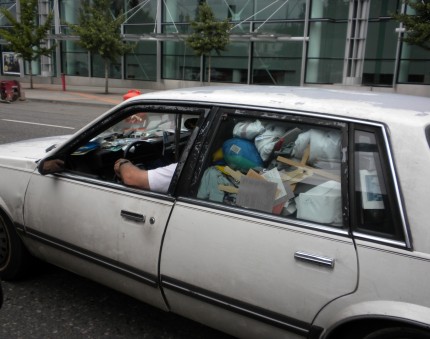
Moving soon? Now’s a good time to shed unwanted items…don’t pay to pack and ship them. Start a few weeks to a few months in advance (depending on the size of your home and time off work,) go at it one room at a time, and beat the clutter.

Bella Organizing Downsize Project – When spaces are too challenging for you to tackle alone, we’re here for you.

Start with an easy room. 

This is an area that won’t slow you down to reminisce and in which you are less likely to get overwhelmed. Bookcases and clothing closets are good places to start, the kitchen (old food, dishes, and cooking utensils you never use) or with nic nacs around the house. Leave paperwork and photos for later; they can be a time and energy stealer, better saved for last.

Set up three boxes and label Give Away, Sell, and Donate.

1) The Give Away box is for things you want to give a friend or loved one.

2) The Sell box is for yard sale, consignment shop, or online sale items.

3) The Donate box is for charity. If all you need is a Donate box, more power to you!

Set up Trash, Recycle, and Shred bags.

You are likely to come across plastic, paper, cardboard, and non-recyclables to place in the trash. Have bags ready to declutter these items.

Don’t know what’s junk and what’s worth keeping? Read tips on how to decide.

Having trouble deciding which clothes to purge? Read more here.

Hazardous and e-waste disposal

Paint, light bulbs, used batteries, cell phones, engine oil, broken electronics including anything with cords and wires, refrigeration, televisions, computers and monitors should not be put in the trash. They are considered hazardous or e-waste and need to be disposed of properly. Community organizations commonly hold free e-waste drop-off events on weekends, and many cities have daily drive-through and drop-off options. Visit Earth 911 to find a location near you.

Interested in making cash off your unwanted items? Read more on how to here.

Tip: Don’t take a chance on identity theft. While decluttering the office, set aside paperwork to shred.

Got paper clutter?

Don’t take a chance on identity theft. While sorting through the office, set aside paperwork to shred including documents with names, address & contact information, account numbers, social security numbers, and other information you prefer no one get their hands on in a recycle bin. Shred tons of paper at a time quickly and inexpensively at a local office supply store such as UPS, or with a shredding specialty company such as Berkeley Shreds.

Considering using donations as a tax write off?

Play it safe, take photos and make an itemized list with estimated fair market or appraised value of each item (see Salvation Army Donation Valuation Guide here). Save this and donation receipts for tax records. In the case of an audit, you may need these as proof of donation. A high-value donation write-off can be a red flag for audit at tax time. Refer to the IRS website for the latest rules on tax-deductible donations.


Isabella Guajardo has provided professional home organizing and residential move management services since 2007. She has worked with hundreds of individuals and families from all walks of life including single parents, public school teachers, college professors, lawyers, doctors, Pulitzer Prize winners, and CEOs of Fortune 500 companies. The thing 90% of them had in common? They had too much clutter and needed to downsize and reorganize.

Call (510) 229-7321 to schedule a complimentary telephone consultation.

Categories
Professional-Organizer

Organizing In Preparation For A Kitchen Remodel

Organizing in preparation for a kitchen remodel in berkeley and oakland

PREPARING FOR A KITCHEN REMODEL

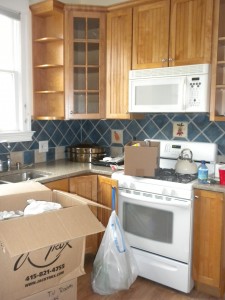
You have the plan in hand, you’ve hired a contractor and now the day for beginning your remodeling project is quickly approaching. You need to clear the kitchen and organize the contents so that you and your family can have access to what you need with ease while the remodel takes place. If this seems overwhelming, follow these steps to simplify the process.

  • Gather supplies. You will need boxes or reusable storage bins, newspapers, packing materials, packing tape, quart and gallon size clear plastic storage bags, and markers for labeling. Avoid packing everything into one big box and having to dig through it later; use as many small 1.5 cubic foot boxes/bins as possible until you start getting to the larger and bulkier items such as pots, pans and platters.
  • Pull out items that you use every day such as the coffee maker, tea kettle, pots, skillets, rice cooker (a remodel lifesaver, especially when it comes with a vegetable steamer compartment), plates, bowls, cups, mixing bowls & cooking utensils, can opener, vegetable peelers, eating utensils. During the course of the remodel you will need these essentials. You can also use disposable/compostable cups, plates and dinnerware. Set aside storage containers for leftovers, food storage bags, foil and plastic wrap, lunch sacks. Also, make sure you have dishwashing and cleaning supplies on hand.
  • Pack eating utensils in gallon size zip-lock storage bags. Use a bag each for knives, forks and spoons. It will make it easy to access, and unpack these items once the kitchen is finished. Do the same with cooking utensils and small gadgets. Store utensils and gadgets in their own small box.
  • Pack glassware and dinnerware carefully. Even though you are packing these items for a short period of time, things can get broken in the process of carrying, stacking and storage. Wrap fragile items in newspaper or bubble wrap to protect them and seal your boxes with tape. Top the box with extra padding so the topside doesn’t sink down when the weight of another box is stacked on it…this can cause boxes to tumble and fall. Mark contents on the outside of each box.
  • Pack canned and dry foods in categories such as breakfast food, canned goods, sauces, pastas, spices, baking supplies, drinks, cooking oils, and pet food. Use small and shallow boxes to keep things organized, upright, and at-hand during the construction activity. Double check that tops are screwed on tightly before packing bottles and liquids upright.
  • Collect items you use infrequently such as holiday dinnerware, specialized bake ware, punchbowls, platters. Pack, mark and store these items in a closet, basement or garage.
  • Keep like items together when clearing out your cabinets. It’s worth taking the time to organize things now and prevent frustration later.
  • Set aside things you don’t use anymore for donation. Make a list and estimate the value before you take them to your local donation center. Throw out anything broken or unusable such as old plastic storage ware. This is a great time to reduce clutter.
  • Pack up cookbooks and recipes in their own box.
  • Take down blinds, curtains, rods and wall decorations. Place the hardware in clear plastic storage bags and label with a marker directly on the bag. Clean and dust these items if you will be using them again in the remodeled kitchen.
  • Cover computer and electronics to protect from dust. You may also want to cover furniture in adjacent rooms that may be affected by dust from the construction area.
  • Take down valuable pictures and wall hangings in adjacent rooms that can be knocked off the wall or damaged during the remodeling process.
  • Protect your pets. Keep them away from the work area.  Dogs and cats can be a danger to themselves and the work crew if they are underfoot. The best option is to keep them in a closed room away from all the work. You can also hire a pet sitter to look after your pets during an extensive remodel.


____

READ MORE BELLA ORGANIZING TIPS, IDEAS & TRAVELS HERE.

Isabella Guajardo, also known as Girl With A Truck™, is a professional home organizer and a member of the National Association of Professional Organizers (NAPO). Living in Oakland and Monterey, she travels in her truck to work with clients throughout the SF Bay Area, East Bay, South Bay, Silicon Valley, Santa Cruz and Monterey Peninsula. She shares simple and creative ways to stay organized and stylish while reducing, recycling and re-purposing. Join Bella Organizing on Facebook. Gift certificates are available.

Call (510) 229-7321 to schedule a complimentary telephone consultation.

Categories
Professional-Organizer

When is it Junk?

If you’re reading this it’s likely you are considering whether something you own is junk or worth keeping. Here’s an opportunity to figure it out:

When is it Junk?

When is it JUNK?

It’s JUNK if:

  • It’s moldy, mildew, stinky and growing spores
  • It’s broken or obsolete (and fixing it doesn’t make sense or is too costly)
  • You’ve outgrown it (physically or emotionally)
  • You’ve always hated it anyway
  • It’s the wrong color, wrong size, wrong style
  • Using it takes more time than its worth
  • You won’t really care if you ever see it again
  • It generates anger, bad memories or bad feelings
  • You have to clean it, store it, and insure it (but you don’t use it)
  • Storing it somewhere else would cost more than its worth
  • It will horrify, bore or burden your kids or the generation to come

If you can truthfully agree to one or more of these, it’s most likely junk. Do yourself, the people you live with, friends who visit and posterity a favor…get rid of it! It’s robbing you (and probably several other people) of space and mental clarity.

It’s not JUNK if:

  • It helps you make a living
  • It will do something you need done
  • It generates happiness, good memories and good feelings
  • It has high or significant cash value
  • It gives you more than it takes
  • It will enrich or delight your kids or the coming generation

If you can agree to several of the above without hesitation, it’s most likely good stuff. Enjoy, appreciate, take care of, and be sure to use it. You don’t need to re-assess its JUNKi-ness until next year.

Resources for consigning, selling, trading, donating and recycling your unwanted furniture, clothing, housewares and more can be found HERE.

____

Isabella Guajardo, a.k.a. Girl With A Truck™, is a professional home organizer and a member of the National Association of Productivity and Organizing Profressionals (NAPO). She travels in her truck to work with clients throughout the greater San Francisco Bay Area while sharing simple and creative ways to stay organized while reducing, recycling and re-purposing. 

Call (510) 229-7321 to schedule a complimentary telephone assessment.

Categories
Professional-Organizer

Apple Galette Recipe

Apple Galette

ɡəˈlet/
noun  – a flat round cake of pastry or bread.

ingredients

  • 1 3/4 cups all purpose flour
  • 1/4 teaspoon salt
  • 3/4 cup (1 1/2 sticks) chilled unsalted butter, cut into 1/2-inch cubes
  • 2 tablespoons ice water (or more as needed)
  • 1 1/2 pounds Granny Smith, McIntosh, Macoun, or Empire apples
  • 4 tablespoons granulated or raw demerara sugar
  • 1 teaspoon finely grated lemon peel
  • 1/4 cup apricot preserves
  • 1 egg or  3 tablespoons whole milk

preparation

Pie crust: You can use a food processor, or make it by hand; I make pie crust using a KitchenAid mixer on the lowest setting. Below is the recipe for using a food processor.

Blend flour and salt in processor. Add butter and blend, using on/off turns, until mixture resembles coarse meal. Add 2 tablespoons ice water and blend just until dough begins to clump together, adding more ice water by teaspoonfuls if dough is dry. Gently gather dough into ball; flatten into disk. Wrap in plastic and chill 1 hour. DO AHEAD: Can be made 2 days ahead. Keep dough chilled (I’m told the secret to great pie crust is keeping the ingredients cold.) Soften slightly at room temperature before rolling out.

Roll out dough between sheets of parchment paper to 1/8-inch-thick round, 14 inches in diameter (it doesn’t have to look perfectly round.) Remove top sheet of parchment. Using bottom sheet as aid, transfer dough on parchment to large unrimmed baking sheet. Chill 15 minutes.

Preheat oven to 450°F. Combine apple slices, 2 tablespoons sugar, and lemon peel in medium bowl; toss to blend. Spread preserves over crust, leaving 1 1/2-inch plain border. Arrange apple slices in concentric circles atop preserves, overlapping slightly. Using parchment as aid, fold plain crust border up over apples, pinching any cracks in crust. Brush crust with lightly beated egg or milk. Sprinkle crust edges and apples with remaining 2 tablespoons sugar.

Bake galette 20 minutes. Reduce oven temperature to 375°F and continue baking until crust is golden, about 30 minutes longer. Keep an eye on the crust. If at any time it starts to darken too much, simply place a sheet of foil over the entire pie in the oven. When baking time is complete, remove pie from oven. Slide long thin knife between parchment and galette. Let stand at least 10 minutes. Cut into wedges and serve warm or at room temperature.

Enjoy!


Isabella Guajardo, also known as Girl With A Truck™, is a professional home organizer and a member of the National Association of Professional Organizers (NAPO). She travels between the San Francisco Bay Area, Silicon Valley, and Monterey Peninsula to get people organized… including kitchens and pantries! Join Bella Organizing on Facebook. Gift certificates are available.