Categories
Professional-Organizer

Week 1 | 52 Weeks to Downsize and Minimalize | What and Why

Welcome to the New Year! It’s a time well-known for getting started on new goals in our resolve for positive change. For those striving to get organized, working to downsize and minimalize that which fills life with unwanted clutter is an important step in the right direction.

Clutter can be physical, mental, emotional, digital, or anything else you feel is taking up your time, space, and energy.

Physical Clutter
Clothing, shoes, books, paperwork, toys, the dishes in the sink… it’s all part of the physical clutter that builds up when we don’t keep things at bay. Too much of it can literally hinder physical movement, and disrupt thoughts and emotions.

Digital Clutter

The email that fills your inbox, photos on your smartphone, a cluttered computer desktop screen with tons of shortcut icons and no filing system in sight, the amount of time you spend online shopping, time wasted on unproductive social media, and other things filling your digital space.

Mental and Emotional Clutter

Along with physical and digital clutter comes mental and emotional clutter. Thoughts, worries, frustrations about past, present, or future work, love, school, friendships, how much paperwork there is to sort through and organize, can be overwhelming and hinder progress in life. Therapy session aside, we’re here to tackle all these things which work hand in hand to clutter up our time, space, and energy.

Let’s get to writing and expressing thoughts and emotions

Grab a journal and pen, piece of paper, or open a Word document and save it to your laptop or desktop computer. This week we focus on expressing what’s on our mind and discover what and why we want to downsize and minimalize, so that we set a solid foundation for this exciting journey we are on together.

Bullet points keep thoughts succinct and organized

Write down all the WHATs and WHYs you want to downsize and minimalize in your life. With each bullet point, allow yourself a deeper answer to the question WHY? until you’re ready to move on to the next item. The following are examples:

What and Why to Downsize

I want to downsize the amount of unhealthy food in the refrigerator and pantry. Why?

  • It takes up space and is a waste of money when I do not eat it all.
  • I want to save money to spend  on other things.
  • The more unhealthy food around me, the more of it I eat.
  • The more I eat, the more weight I gain. I don’t want to gain weight.
  • I feel better about myself when not overweight, and my clothes fit better.
  • I am concerned about preventing diabetes and heart disease, especially since they run in my family.

I want to downsize the amount of toys cluttering the house. Why?

  • The house is always a mess at the end of the day.
  • I don’t want to pick up after my children.
  • I want a clean and comfortable home when I get off work, so I can relax.
  • I need more time for myself. I am happier when I have more time for myself.

What and Why to Minimalize

I want to minimalize the amount of stress in my life. Why?

  • because I don’t feel good when I’m stressed. I get angry or depressed, and am not happy.
  • it causes communication problems with colleagues, and with my spouse when I get home from work.
  • it doesn’t make me feel good about who I am and what my life is.

I want to minimalize the amount of money I spend online. Why?

  • I’m going into debt.
  • I buy stuff I don’t use, and it’s cluttering the house.
  • I want to save money and pay off bills, because I want to save for a downpayment on a home.

I want to minimalize the amount of clothing and shoes in the closet. Why?

  • There’s no room in the closet for everything I own
  • It becomes a jumbled mess because there’s too much stuff
  • I hate cleaning and organizing, and just want everything to be neat and easy to find
  • If things are neat and easy to find, I’ll have more time for other things, and maybe get to work on time

Over the course of the week, add more to the list. During the work commute talk to yourself, with a trusted friend, or a stranger you’ll never see again about the things you want to Downsize and Minimalize in your life, and then write them down. It’s important to have your own words, thoughts, and emotions to look back on and mark progress. I will be checking in on this Facebook event throughout the week to answer questions and post next steps.

For those interested in reading two of my personal What and Whys…

I’m sharing the “What” and “Why” of two things I want to Downsize and Minimalize in my own life this year, which have to do with PHYSICAL and DIGITAL clutter. I have more than two items, but won’t bother you with them here. I will work on them on my own along the way. 

Downsize & Minimalize – What and Why

I want to downsize the amount of shoes I own. Why?
• Despite regular purging, I still find I don’t wear most of what I have.
• I have a few pairs of shoes that cannot look any better when cleaned, and I don’t feel good when I wear them because of it (except for hiking or workout shoes, which are naturally worn-looking but still in good working condition.)
• They take up too much space in my closet (especially the boots) that I prefer to have clear.
• The housecleaner would be able to reach and clean that empty space.
• If I have fewer shoes, I would be forced to wear my best shoes more often.
• I want to look my best wherever I go, and if I’m always wearing good-looking shoes, I feel better about myself. And I always get compliments when I wear my best shoes!

I want to minimalize the amount of time I spend on my personal Facebook page. Why?
• It takes time away from being productive in lots of things. It’s a HUGE time waster. The biggest one I have. One time I spent two hours scrolling and came out of it with no new important knowledge or information!
• Although I enjoy communicating with long distance friends and family this way, need to use it for my business, and through it stay current on important world news and events, I’m tired of reading feed about awful things happening to people I don’t know, sinkholes, fatal car accidents, and other things not in my control that make me sad.
• I feel like I’m getting addicted to Facebook. I don’t like the feeling of addiction.
• It’s time I can better spend on my business or other work that needs to get done.
• I need to exercise my brain in better ways in preparation for getting older.
• I’d rather read a book in that amount of time and exercise my brain.
• My vocabulary improves the more I read a book or magazine article.
• The conversation has more substance when I talk with people about what I read in a book compared to what I read on Facebook.
• I’d rather spend that time having lunch or tea with a friend, calling someone on the phone, hiking with my dogs, or doing sit-ups in the living room.
• I notice that my wrist and hands feel pain and very warm in an unhealthy way the more I hold my phone in my hands when on Facebook (and the cell phone in general).

Bella_Organizing_Best_Professional_Organizers_San_Francisco_Oakland_Berkeley_silicon_valley_montereyIsabella Guajardo, founder and owner of Bella Organizing, is a San Francisco Bay Area professional organizer offering home organizing, interior redesign, and residential move management services throughout the Greater San Francisco Bay Area. Call (510) 229-7321 or email info@bellaorganizing.com for more information. Gift certificates are available.

Follow our projects on: Facebook | TwitterInstagram | Houzz

Counties we serve:

Alameda | Contra Costa | San Francisco | Marin | Sonoma | Napa | Santa Clara | San Mateo | Santa Cruz | Monterey
best_professional_organizers_san_francisco_oakland_berkeley_bella_organizing_declutter_organize

Categories
Professional-Organizer

Honey Lemon Sugar Scrub – Make At Home

Honey Lemon Sugar Scrub

sugar-scrub-recipe-home-organizing

Good for the face, neck, hands, and feet for cleansing, smoothing, and moisturizing.

“Everyone should exfoliate, every day, even guys.” ~ Bette Midler

When I ran out of my favorite Bert’s Bees exfoliate a couple years ago, I changed my ways for good. I didn’t like the additive ingredients listed on the label. Bert’s Bee’s is supposedly all natural, so why all the extra stuff? Probably to extend shelf life and patent the product.

On the label I noticed main ingredients I have around the house: sugar, honey, lemon. I did research, experimented, and came up with this delicious, homemade & biodegradable body product recipe to share with you – and without the microbeads!

This sugar scrub recipe makes one and a half cups; enough to fill two small Kerr 4 oz. jars. It can be modified to make a large amount. I choose to use all-organic ingredients, but it’s not necessary for the final product. 

Ingredients

  • 1 cup granulated sugar (white or brown)
  • 1/4 cup olive oil
  • 2 Tablespoons honey
  • The rind of one small lemon

Directions

Mix sugar, olive oil, and honey together in a bowl. Shred and add lemon rind. Stir to combine.

Scoop into a wide-mouth container with a lid. I reuse the Bert’s Bee’s container and clean it with soap & warm water before every refill. You can also use glass canning jars available at most home and hardware stores, or reuse 4-8oz body product containers you already have once empty. This sugar scrub is fresh, so use within a few weeks and be sure to always scrub the skin gently with it. I place it on my shower caddy and use daily. It also makes a great homemade gift.


Bella_Organizing_Best_Professional_Organizers_San_Francisco_Oakland_Berkeley_silicon_valley_monterey

Isabella Guajardo, founder and owner of Bella Organizing, is a San Francisco Bay Area professional organizer offering home organizing and residential move management services throughout the Greater San Francisco Bay Area. Call (510) 229-7321 or email info@bellaorganizing.com for more information. Gift certificates are available.

Categories
Professional-Organizer

Closet organizing made simple – maximize your space with better hangers

How to Use Skirt/Pant Hangers

I do a lot of closet organizing and see a variety of home made and professional installation systems. Even the biggest and most well-designed closets can have organizational problems. What if you have a tiny closet or simply too many clothes like most of us? A quick and easy fix-it starts with analyzing the type of hangers you are using.

We accumulate a variety of  hangers over time: colorful plastic tubes, bulky wood, padded sweater and metal dry cleaning hangers are common.

Tube hangers are sturdy, inexpensive, easy to acquire, and are used for just about everything: blouses, t-shirts, sweaters, dresses, folded over pants and skirts. If you have collected a variety of these colorful hangers…beware! It makes the closet look messy and clothes tend to slide off their smooth surface. Plastic is a material I suggest be phased out of the home whenever possible, and considered primarily for garage, attic and basement storage containers, and areas where liquids can spill and permanently damage the container. If you already have or prefer plastic tube hangers, use the same size and color for visual consistency; this alone will make the closet look and feel more organized.

Padded sweater hangers are meant to prevent stretching at the shoulders, but I have witnessed stretching on them anyway. These hangers also take up a lot of space and can be difficult to slide across a hanging bar when searching through the closet. The key to preventing hangers from stretching sweaters at the shoulder is to 1) wear them regularly, and/or 2) fold and stack sweaters instead of hanging.

Organize My Closet
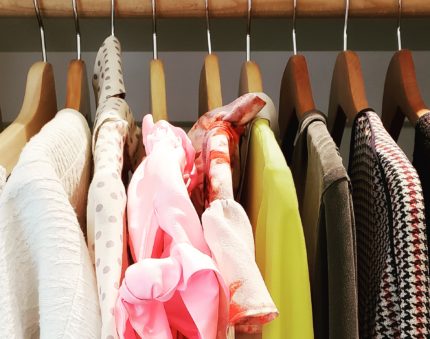
Wood hangers are good to use if you have the space. Whatever material they are made of, consistently sized, shaped and colored hangers give the closet a sleek and minimalist look and feel.

Wooden hangers look nice, are sturdy, and one of the natural materials I prefer for the home. They work best for large and heavier clothing, suits and jackets in a hallway entry closet, but tend to use up too much space in a wardrobe closet. Stick with slimmer hangers where you can.

What about dry cleaner hangers? Why bother transferring clothes onto regular hangers when they are already hung when picked up from the cleaners? Dry cleaner hangers are slim and sleek, therefore take up little space…as long as they don’t bend and tweak out of shape. If you wear the same dry-cleaned clothes every week it makes sense to consider using them as your regular hangers (please at least remove the plastic bag covers!) If your clothes will be hanging for a while, transfer them onto better hangers, for safe storage and aesthetics. Otherwise, your clothes may lose their shape quicker. Typical dry cleaner hangers also bend out of shape quickly and snag other clothing.

Slim hangers of the same size and color give the closet a sleek, minimalist look and feel. The ones I like to use have a velvety finish, chrome or nickel hooks, and a good shape to the shoulders, which helps keep clothes from stretching and slipping to the floor. They work well for most lightweight shirts, blouses, and tanks, and are almost completely flat allowing you to hang many items close together, creating space where there was none.

Here is a similarly slim hanger made of a rubber material which I prefer for extra large and heavy men and women’s clothing. They work well for coats and jackets, too:

Cascading hangers with clips further maximize space. They allow pants and skirts to hang their full length, keeping them wrinkle free. The ones shown here have a small hook to hang them on one another, allowing you to maximize vertical space. These hangers keep their shape over time and can hold a lot of weight without collapsing, unlike plastic tube and dry cleaner hangers.

Do you or your partner have neck ties that need proper hanging? See my quick video below where I demonstrate one of my favorite tie hangers and how to use it.

Choosing the right hangers can create space where you did not know you had it. Slim hangers, wooden hangers, and cascading pant and skirt hangers are great choices for streamlining your wardrobe closets for function and aesthetics. Maximize space by adjusting the type of hangers you have; it is an easy and inexpensive way of making the most of a small closet without sacrificing style or durability.

____

Ready for more? Call (510) 229-7321 today to schedule a complimentary estimate for your closet and wardrobe organizing goals. Gift certificates are available.

Keep up with Bella Organizing on Facebook and Instagram.

How to Use A Tie Hanger
Categories
Professional-Organizer

Home Workshop Makeover

office-organizing-before

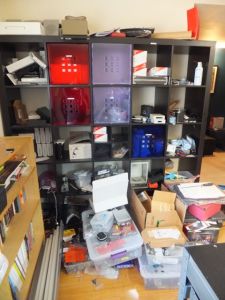
Storage shelf mayhem (BEFORE)Home-workshop-organizing-before-2

The Transformation…

office-organizing-after

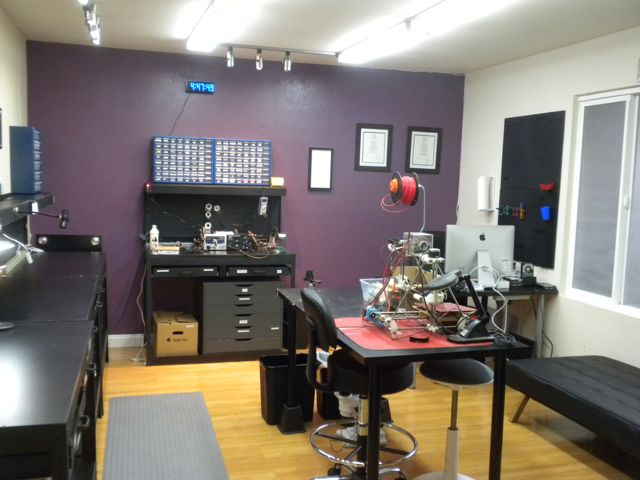
We started with an on-site consultation and planning session to develop goals and a timeline for getting my client’s workshop organized. I assessed the project would take 2-3 sessions depending on how much homework he did between them.

The first session consisted of sorting, purging, and cleaning for a day.

Next, I re-assessed the space to include room redesign plans. Based off what the client decided to keep, what we could reuse, and what needed to be acquired, I created a resource and supply list. The client agreed to be in charge of purchasing items needed to move forward.

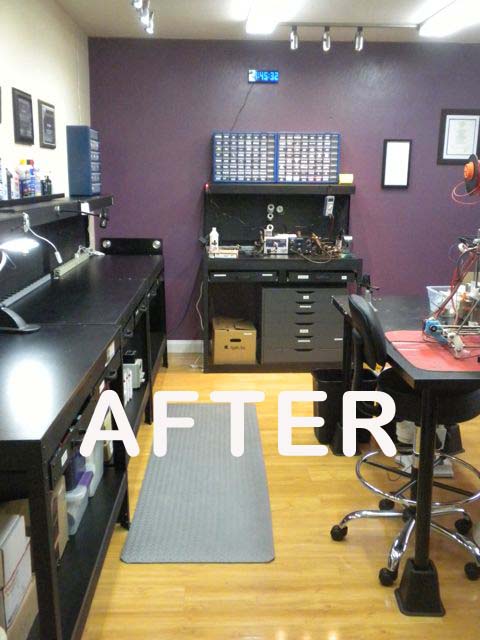
I knew the room would function and flow nicely with workstations against the wall, opening space in the center for a project display table. I designed an area for a desk facing the room where he can oversee his domain while working on the computer.

There was not a comfortable space to sit and relax, so a lounge area was planned by the window.

There was not overhead lighting, so we planned for a variety of light sources including tabletop lamps.

The stark white room needed a splash of color, and I knew Plum Wine would do the trick on the far wall.

More “after” photos

All four work stations were moved against the wall. Projects were sorted, given their own bin, labeled and placed underneath to keep tabletops free of clutter until it was their time to come out. Task lighting was placed at each table:

 home-workshop-organizing-4

Provided with placement suggestions and resources, my client saved quite a bit of money by acquiring and installing LED spotlights and additional overhead lighting himself:

workshop-organizing-lights

Tools and commonly used supplies were organized into labeled drawers. My client preferred LOTS of labeling so he can get into the habit of putting things back where they belong. He even made his own drawer dividers. Additional project and supply bins are placed underneath:

 home-workshop-organizing-5

Small electrical supplies were sorted, organized, and labeled. Below is the soldering station with tools and supplies:

 home-workshop-organizing-5

Alphabetizing makes things easy to find. We reused some labels and created lots more that were previously hand-written:

 home-workshop-organizing-6

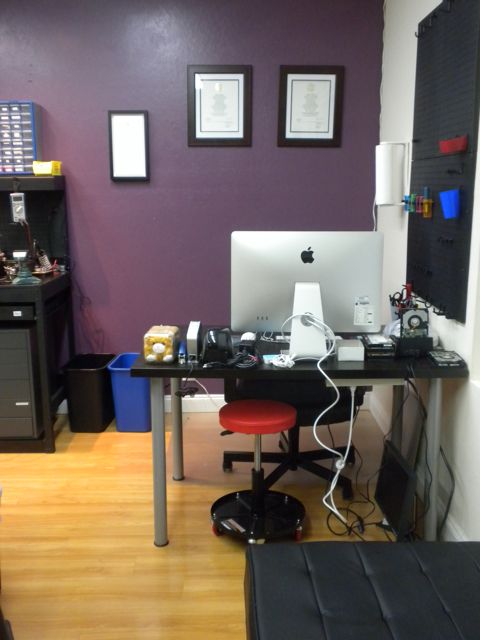
Using an extra table in the room, a computer desk was set up. Degrees and awards were placed on the wall behind it. A black leather lounger, just the right size for the space, was acquired and placed by the desk and window. A new, more comfortable desk chair and rolling stools were purchased. My client obtained the seating, and saved money by painting the wall himself. He did an excellent job!

 home-workshop-organizing-8

An organized & redesigned home workshop.

 home-workshop-organizing-10

This project was one of my favorites. Why? Because the client was an action-taker, did his homework on schedule, and did it well! It took a 2-person Bella Organizing team 2 sessions to redesign, clean, and organize. We hauled away 1.5 truckloads of e-waste including hundreds of cords and wires, old chairs and misc. to be donated and recycled. With the help of a very motivated client in charge of purchasing, lighting installation, and painting, this home workshop is now ready to roll.

Gift Cards Are Available.

Follow our projects on: Facebook | TwitterInstagram | Houzz

Categories
Professional-Organizer

Paperwork Organizing Tips

Paperwork organizing may be challenging for you, but it doesn’t have to be. I have taken control of my paperwork over the years by working on it a little at a time, sometimes daily, sometimes weekly.

The key for me is to deal with mail as soon as I walk in the door. I walk to the kitchen, stand over the recycle bin and drop in whatever I don’t need. I open mail and immediately recycle envelopes and inserts… I filter out most paper clutter before it hits a surface. I then put bills and correspondence on a designated work area, my desk, instead of on the kitchen or living room table.

I’m concerned about my name and address going into the recycle bin, so I tear off and shred it. I also have an identity theft protection rubber stamp that I use at my desk, like this one pictured from Solutions.com ~ you can also get it on Amazon and at Bed, Bath and Beyond.

Identity Theft Protection Stamp

If you get a lot of junk mail, go a step further by starting a shoebox size bin in which to collect unwanted mail, catalogs and advertising for a few weeks, and schedule a date on your calendar to call and get off those mailing lists. If you don’t want to make the calls, have Catalog Choice do it for you. You’ll start receiving less paper mail, which means less clutter to deal with later.

What do I do with the paperwork that begins to pile up on my desk?

Each night I sit at my desk and file away what I need to keep as reference. If you practice this daily for a few weeks, you can form the habit, really you can! It’s ok if you miss a day or two. But get back to it on day three.

I use a cork board on the wall in front of my desk to pin up small notes and important reminders. I take down and file or recycle weekly anything that no longer applies. Here’s an example of a DIY cork board from Apartment Therapy…

corkboard paperwork organizing
DIY Corkboard from Apartment Therapy

Don’t let bills and important correspondence go out of sight, out of mind. If not dealing with it immediately, create a specific area where you place and see them daily, such as standing upright in a desktop file folder, or pinned to a corkboard on the wall by your work area. Highlight or circle due dates on bills.

Desktop file holder from Containerstore.com

Paperwork and receipts it’s a good idea to keep:

  • Adoption paperwork, birth certificates, marriage license, divorce documents
  • Car titles, repair and maintenance receipts.
  • Personal identification, social security statements.
  • Educational degrees and certifications.
  • Home improvement paperwork and receipts.
  • Insurance documents for current policies.
  • Medical receipts and reports.
  • Warranties and manuals: things you still own.
  • Receipts for high value home or office furniture, computers, electronic equipment, household goods, art, anything you may one day want to sell or may need for value reference in the case of a home or renters insurance claim.
  • If you’re holding onto department store receipts in case you want to make a return, but the return date is expired, do you still need to keep the receipt? Sometimes yes, many times no.
  • Any kind of tax document. When the year is up and it does not need to live in my active files, I store them with that years tax return in a closet designated specifically for this kind of storage. Since I run a business, my CPA requires that I receive all work-related receipts, bank and credit card statements in the paper format. But I’ve set myself up to get personal statements and receipts electronically. I log on regularly to pay bills and take a glance for funny business. So far, so good!

More ways to prevent paper pile up:

  • Go paperless wherever you can.  NOW is the time. Get online and learn how to receive statements, bills and receipts via email. Learn how easy it is to download and store them onto your computer as a digital document. If you ever need a paper copy, simply print from your digital storage file. Consider going paperless with one or two minor bills first. If you find this works for you, practice with other things. A little at a time steadily builds new habits.
  • When signing up for something or ordering online, be sure to uncheck boxes that allow the business to send you paper mailings or catalogs. It’s easier to remove yourself from email than mailing lists down the line.

We have individual needs to consider when it comes to dealing with paperwork. For this reason, I suggest consulting with your CPA or legal advisor about what you should be keeping vs. recycling or shredding. From my own home office and that of many clients I have worked with over the years, what I have found is this: we are quite more similar than different. So do not feel alone with your paper clutter! Deal with it a little at a time, and on a regular basis. If you’re not going to hire a professional organizer or personal assistant to come in weekly and do it for you, learning to self-maintain is key. Like good habits, getting organized with paperwork is something that can be learned.

Ready for more? Call (510) 229-7321 today to schedule a complimentary estimate to get your paperwork or home office organized. Gift certificates are available.

Keep up with Bella Organizing on Facebook and Instagram.