Categories
Professional-Organizer

How To Handle A Child’s Toy Clutter

As a professional organizer I get questions from parents on ways to get their children to let go of outgrown and excess books & toys. No one wants to traumatize their child by giving away something he or she loves and adores.

In my ongoing search for the latest and greatest research and information to answer these kind of questions, I attended an “Ages and Stages in Early Childhood Development” workshop Jewish Community Center (JCC) in Berkeley. The workshop focused on children ages 2-6, and is one of a series of monthly Free Parenting Workshops at the JCC going on now through Spring 2015.

I gathered a lot of updated information, and had the opportunity to ask plenty of important questions that parents ask me. The following is a synopsis.

Can’t get your kid to pay attention when asking him/her to clean her room? Get this!

There are 3 types of attention:

1)   To danger – Children pay attention to danger from infancy & up

2)   Only to their own interests age 2,3, and mostly by age 4

3)   Children put attention to where someone else (mom and dad) wants it by age 7 & 8. They are more capable of paying attention to what you want and say by this age than any other. If attention is a problem after age 8, an attention deficit evaluation is suggested.

The 2-year old

  • The average 2-year old has recognition but not recall. This means that when mom is gone and out of the room, she is gone, even if there a second ago. That’s why children this young get fussy…they don’t recall who was just there or what happened. A good age to gather up and stash away or donate half of the toys and books cluttering up the room? Hmm…
  • At this age kids get stuck in routine, and will get upset if you skip something they usually do. Children make sense of things by sequence. When you throw the sequence off, it annoys them. Routine is important. This is a good time to make it a daily routine of helping your child put toys away when playtime is over.

The 4-year old

  • At this age, many kids start to give up on things that are hard for them to do (such as put away clothes and toys). This is an important time to take action and support them in practicing to get better at it. Teamwork works wonders at any age!
  • When kids don’t listen, it’s a GOOD sign of neurological development happening. They need to screen things out to avoid emotional overload. Children are all or nothing thinkers at this age; things are either all good or all bad. They cannot find balance between the two yet, and is why mood swings occur. Complex concepts don’t often start until age 8. At age 4 it may be futile to try and rationalize to them as to WHY they need to clean and organize their room.
  • A child becomes interested in problem solving at age 4. This is a good time to have weekly family meetings that include the child. Introduce him/her to making a calendar of things to do together for the week that will solve common issues around the house, such as a messy room. Have the child come up with creative solutions to the problem, then make a schedule and routine that YOU will help her implement and maintain on a regular basis.
  • Ask, don’t “tell” the rules. Ask the child to do something you want them to do. If you want him to put his toys away before bed, ask “what do you have to do to get ready for bed?” If you created a schedule and routine together, he should know exactly what needs to be done, whether it’s put on his pajamas, brush his teeth, or put away toys. When they get it done, a little praise goes a long way. “Good job! High five!”
  • Fibbers: when lying, a child is simply trying to be the person you want her to be. Don’t give a child the chance to lie; if you see a problem – such as toys that still haven’t been picked up – fix it together. Yay teamwork!

*** Temper Tantrum Intermission ***

  • If a child gets upset and fussy because she doesn’t want to pick up her things, focus on validating the child’s feelings at the moment they are upset with kind words such as “You must be upset about putting away your toys. How can I help you so that we get this done together?”

The 6-year old

  • Managing praise – At this stage they begin to measure themselves by what they see around them. They start to discount praise, so ask what they think about how they did, such as when they successfully put away their clothes or toys.


Q& A with the Workshop Presenter

Question: At what age are kids more likely to be able to clean up on their own?

Answer:   Not 4 years old because they are still self-centered. You have to help them and make it fun and interesting. Clean up with them ages 2-5.

Question: At what point is it easier to get them to give up toys without being hurt by it?

Answer:   3-5 year olds forget what’s important to them, which can include toys. A 2-year old won’t care to lose toys, a 6-year old may start to miss them.

Ways to PREVENT and TAKE ACTION on toy clutter:

  • When working with a child to declutter toys and books, tell him/her about places they can donate to kids in need, such as homeless shelters or during toy drives. Pick a place to donate to together and follow through with it.
  • At your child’s next birthday party, make a themed gift donation box that everyone attending knows about in advance. Gifts received will go directly to charity, such as school supplies to a classroom in need.
  • Put excess toys into bins and stash in the garage for 3 months. What the child remembers and asks for, bring out. What they forget, donate.
  • Kids get overwhelmed by choice. Don’t try to get them to make decisions about what to keep and what to donate but for a few things at any given time.
  • What we hold off as a reward is what kids are more motivated toward. Find creative ways to get your child to let go of excess toys once in a while, such as making it a house rule during the weekly family meeting to only allow in a new toy or book if one or two goes out.  
Helen_Neville
Helen Neville

The Ages and Stages in Early Childhood Development workshop is led by Helen Neville, a pediatric advice nurse at Kaiser Permanente for 35 years. She is a specialist in inborn temperament and the author of Is this a Phase? Child Development, Parent Strategies Birth to 6 Years, and other books on temperament, sleep, and potty training. For more information, visit her website: http://www.temperamenttools.com/index.html

For information about upcoming JCC events & workshops, visit their website.

Isabella Guajardo, also known as Girl With A Truck™, is a San Francisco Bay Area professional home organizer and member of the National Association of Productivity and Organizing Professionals (NAPO). She shares simple and creative ways to stay organized while reducing, recycling and re-purposing. 

Categories
Professional-Organizer

How To Sell Your Items at Auction

When I work with clients to declutter their homes, we often uncover valuable treasures worth selling. There are many ways to make money from unwanted items: Craiglist, Ebay, Amazon, consignment stores, garage sales, etc. But not everyone feels comfortable inviting strangers from Craigslist to their home, nor getting offers of only 25 cents at a garage sale for a beloved treasure worth so much more. Selling things online requires time to open an account, read all directions to make sure you are going through the process correctly, take photos, post a detailed description of the item, store it, then pack and ship (when and if it sells). For some these steps are exciting and managable, for others it takes too much of their valuable time.

Have you considered having your valuables sold to the highest bidder at a live auction house? It can be done at Michaan’s Auctions in Alameda CA. If you have 1-5 items, there are easy steps to follow:

Step One: Have your item(s) appraised in one of three ways:

  • Attend a weekly Michann’s appraisal event. They currently take place every Wednesday 10am-1pm. Specialists offer evaluations for up to 5 pieces. Appraisals are held in the main gallery on a drop-in basis. No appointment is needed.
  • Schedule a private appointment by calling (510) 740-0220 ext. 130
  • Submit a photo of the item online at http://www.michaans.com or snail mail the images to their mailing address below.

Step Two: Sell your items

  • A consignment contract will be provided which outlines the terms of the sale.
  • After consigning you will receive a list of property descriptions and scheduled dates of sale
  • Before property goes to auction you can also set a confidential minimum selling price known as a “reserve.”

Step Three: After the auction

  • A statement will be mailed to you detailing what items were sold as well as their selling price.
  • In six weeks you will receive a check for your sold items.

Michann’s provides onsite assessments by advance appointment when you have A LOT of valuables to sell. They serve the San Francisco Bay Area to the Monterey Peninsula. For more information, give them a call or visit their website http://www.michaans.com

michann's


Michann’s – 2751 Todd Street, Alameda CA 94501 (510) 740-0220

Source: “Michaan’s Auction how to Sell at Auction.” Montclarion (Oakland, CA) 13 March 2014: 405. A5. Print.

Isabella Guajardo of Bella Organizing is a San Francisco Bay Area professional home organizer and member of the National Association of Professional Organizers (NAPO). She shares simple and creative ways to stay organized and stylish while reducing, recycling and re-purposing. Join Bella Organizing on Facebook.


Categories
Professional-Organizer

A D.I.Y. San Francisco Wedding

– by Isabella Guajardo

Valentines Day has come and passed. Do you or someone you know suddenly have a wedding to plan? Congratulations! This is a popular time of year to pop the question. Don’t let what comes next stress you out. Organizing your own wedding can be fun, classy, and less expensive than you think. Read tips from Jaime Borschuk, a web designer, musician, and recent bride who rocked her DIY San Francisco wedding.

wee_wedding_san_francisco
Jaime & Thor | Photo by Debra A. Zeller


When and how did it hit you about the planning and organizing you had to do for the wedding?

It never hit me in the way that we are led to believe by magazines.  Just because other people get stressed out about weddings doesn’t mean it’s a given. The party planning aspect happened pretty calmly and naturally for us. The best move I made was finding a venue right away. We booked the first place we looked at, a private garden I found on AirBnB, about 10 months out. Once the venue is confirmed there is some peace of mind and structure, because you’ll use your location as the framework for all the other decisions. The rest of the standard things to consider (caterer, desserts, florist etc) we figured one at a time out over the next several months.

 To what or whom did you turn to for help? What resources did you seek out, find, and utilize?

With guilty pleasure I immediately picked up 5 different Bridal Magazines from Walgreens, and they were all…generic and promoting expensive ideas and also “budget” ideas that didn’t seem very budget friendly to me. In short, I did not relate to them at all. I don’t think it was a total waste of time, it was still kind of fun in the way that it’s fun to read People Magazine for a joke, but I did not feel inspired.

I also glossed over a couple of blogs, but honestly there wasn’t anything there I really wanted to look at either. I ended up realizing that I just wanted to plan a fun party that happened to be my wedding, and I actually did not want to be persuaded by what I “ought” to do. I figured, if I didn’t think of it maybe it doesn’t really matter anyway?

Apart from event planning, I highly recommend getting a book about ceremonies. This was something we didn’t think about until later in the game. Since our officiant was a friend marrying people for the first time, none of us knew what we were doing. I got the book Sacred Ceremony by Dayna Reid and it spelled out all of the elements you could have in a wedding, including what is and what isn’t optional. There are also ideas for how to word your vows, which we wrote ourselves. Many wedding resources gloss over this part of the wedding in favor of wedding wear and event logistics/supplies. But it’s pretty important to have the ceremony suit you. Ours was very short by design, but it still took some design time.

How did you organize yourself throughout the wedding planning process? (paper, digitally, etc.)

Digitally! My husband and I shared a Google Doc of all of the different things we needed to buy, when we needed pay for it, and where the money would come from. We had a column for money paid and money owed, and we put numbers in red for payments due soonest.

Jaime also designed and organized her own wedding website complete with information guests would need, and later added photos of the event. Take a look! http://www.theweewedding.com/

What were your greatest successes and challenges when organizing the wedding?

We had great vendors for everything. The location hosts, the officiant, the caterers, the baker, my day-of coordinator, the photographer, the florist, and the musicians— they were all really true to what we would want for a gathering of any day. Some were already our friends, and others we chose were vendors who we’d want to be friends with. We decided early on that we wanted the party to feel like something we’d like to attend, and something we’d want to do whether or not it was a wedding. I mean, as long as you are budgeting for a wedding, you might as well just create a fantasy party scenario. We asked the founder of our favorite record label to perform. He didn’t know us from a hole in the wall, and he nonchalantly agreed! It was like we got permission to coordinate our dream circumstances.

One thing I am really glad I did was hire a day-of coordinator (Genevieve Roja /Lily Spruce). This meant that I didn’t have to pay for a full on wedding planner, but I also did not have to worry about vendors bothering me while I’m trying to just dress up and enjoy my wedding day. You could delegate these tasks to friends or bridesmaids as well, but I didn’t feel like managing my friends— a lot of them were in from out of town and I just wanted them to have fun. I am really happy to have hired Genevieve; she knew the right questions to ask because she has done this for a while. She lined the vendors and schedule up weeks out and was there with an assistant to greet all the logistics of the actual wedding day itself. Also, she met with us the day before the wedding to run through the ceremony and helped us figure out where to stand and timing and all that.

One point of mild stress was that the wedding was going to be outdoors in San Francisco. We scheduled it for a pretty non-threatening month (October), but still the weather can be unpredictable. I kept thinking of the October we got poured on during the Treasure Island Music Festival! But the weather ended up perfect— comfortable without a jacket! We kept an eye on weather in case we needed to plan for rain coverage.

Another point of stress initially was that the venue had some challenges—it was a non-traditional space with lots of nooks and crannies where people could trip, fall, or hit their head on something hard. This was not something we even thought about when we booked it, but at my first meeting on-site with the caterer she immediately seemed very concerned about liability. She was coming at it from the viewpoint that her staff needed to walk around with drinks and trays of food, guests would be wearing impractical dress shoes, and any children in tow might easily run off and get hurt. That day I had the sinking feeling we were doomed and it was too late for a plan B. But the caterer slept on it, plotted it out and decided she would make it work on her end. On my end, I made sure to warn guests of uneven ground and recommended sturdy shoes as part of the dress code. The lesson here is to think about the potential for accidents ahead of time and also make sure both your caterer and venue carry proper insurance. Everything turned out fine in the end.

Would you do it any different if you had to do it all over again? (not that there will be another wedding anytime soon).

I would have invited a few more people. When you are sending out invitations, you tend to feel like it’s going to get too crowded and you start making horrible lists of first tier vs 2nd tier friends. But some of the people who RSVP yes will need to bail at the last minute anyway. Since we had a buffet (which I highly recommend!) and not a plated meal with assigned seating, it was not necessary to think about costs in terms of exact head count. I didn’t fully realize that until after.

What advice can you give to someone who would need to organize a wedding themselves?

Make a list of all the things you need to spend money on and prioritize what you don’t want to cut back on vs what you could reasonably cut back on. For us, we didn’t spend a lot on the venue, but we knew that being cheap about the catering would just be the wrong corner to cut, so that is where the bulk of our budget went. The food was great and the included servers made it feel super classy. Also, if you have a skill, do not be afraid to offer trade for wedding products/services. I negotiated a web design trade with the jeweler who made our rings, and it helped a lot not having to pay full price for that along with everything else.

Who helped run the show?

Day-of Wedding Coordinator: Genevieve Roja http://www.lilyspruce.com/
Catering: Idit Oz http://www.ozcatering.net/
Photography – Debra Ann Zeller – http://www.debrazeller.com/
Flowers – Church St Flowers – http://www.churchstreetflowers.com/
Dessert – The Heartbaker – http://www.theheartbaker.com/
Dress – Amy Kuschel http://www.amykuschel.com/
Suit – Al’s Attire http://alsattire.com/
Rings – Jeannie Hwang http://www.jeanniehwang.com/
Wedding Singer: Calvin Johnson
Comedian Officiant: George Chen
Location: The Magical Garden
 

jaime_borschukJaime Borschuk is a San Francisco-based web designer and musician. She lives with her husband Thor and a grumpy cat named Lady Grey that prefers organic wet food and does not like vacuums or meeting new people. You can find Jaimie at jtotheb.com

Categories
Professional-Organizer

Closet Makeover Contest Winner – Before & After Photos

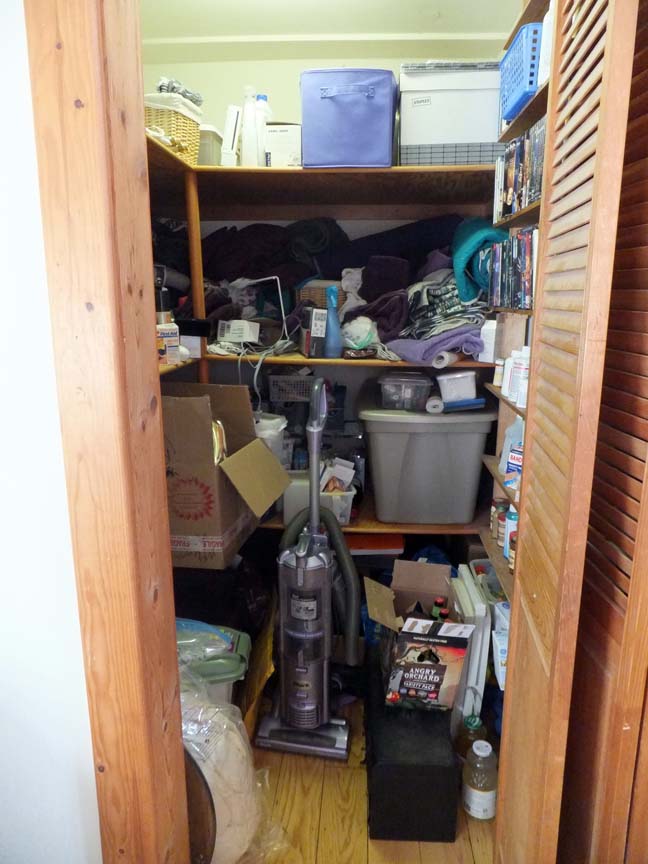
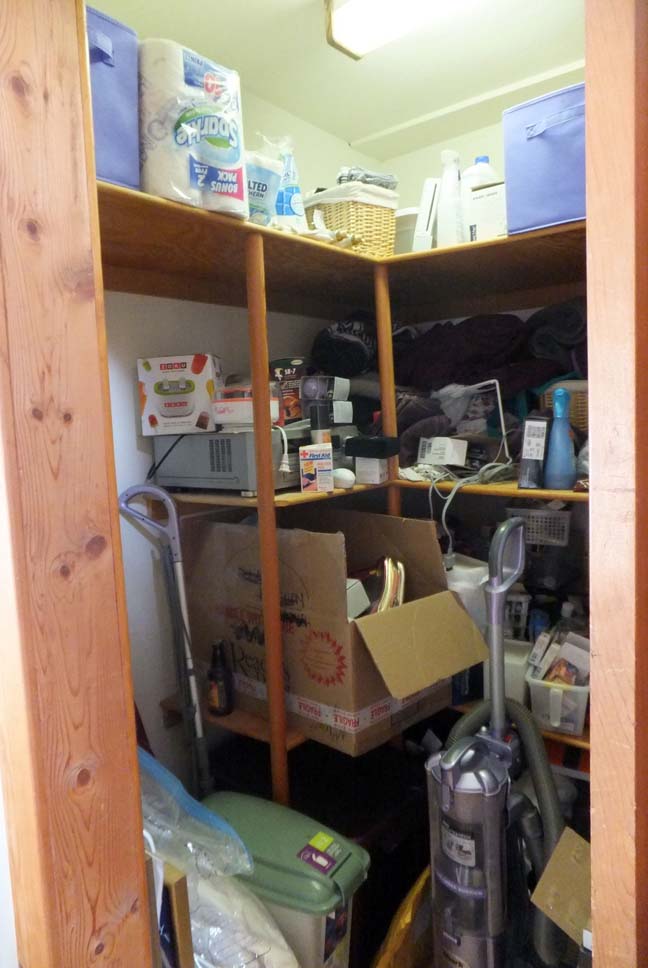
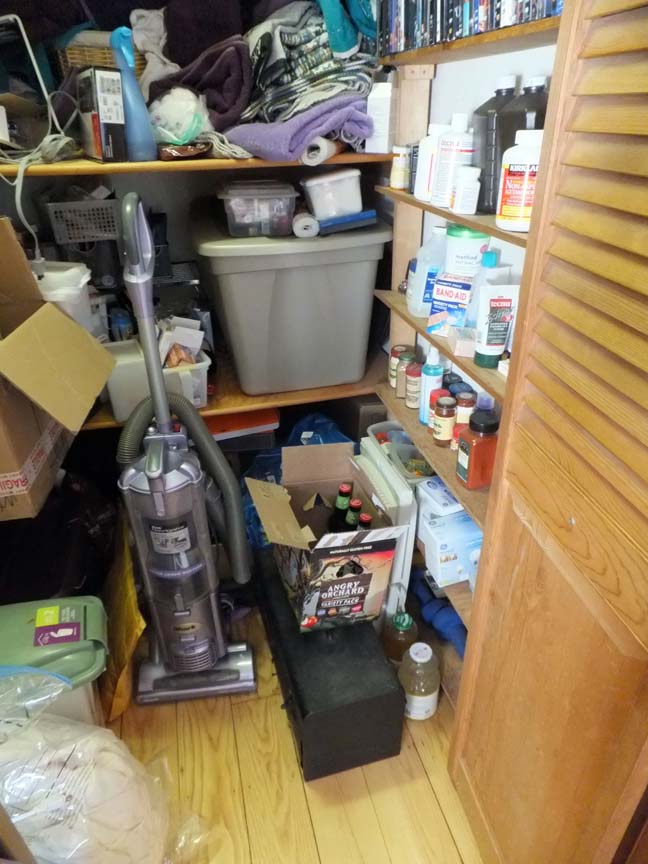
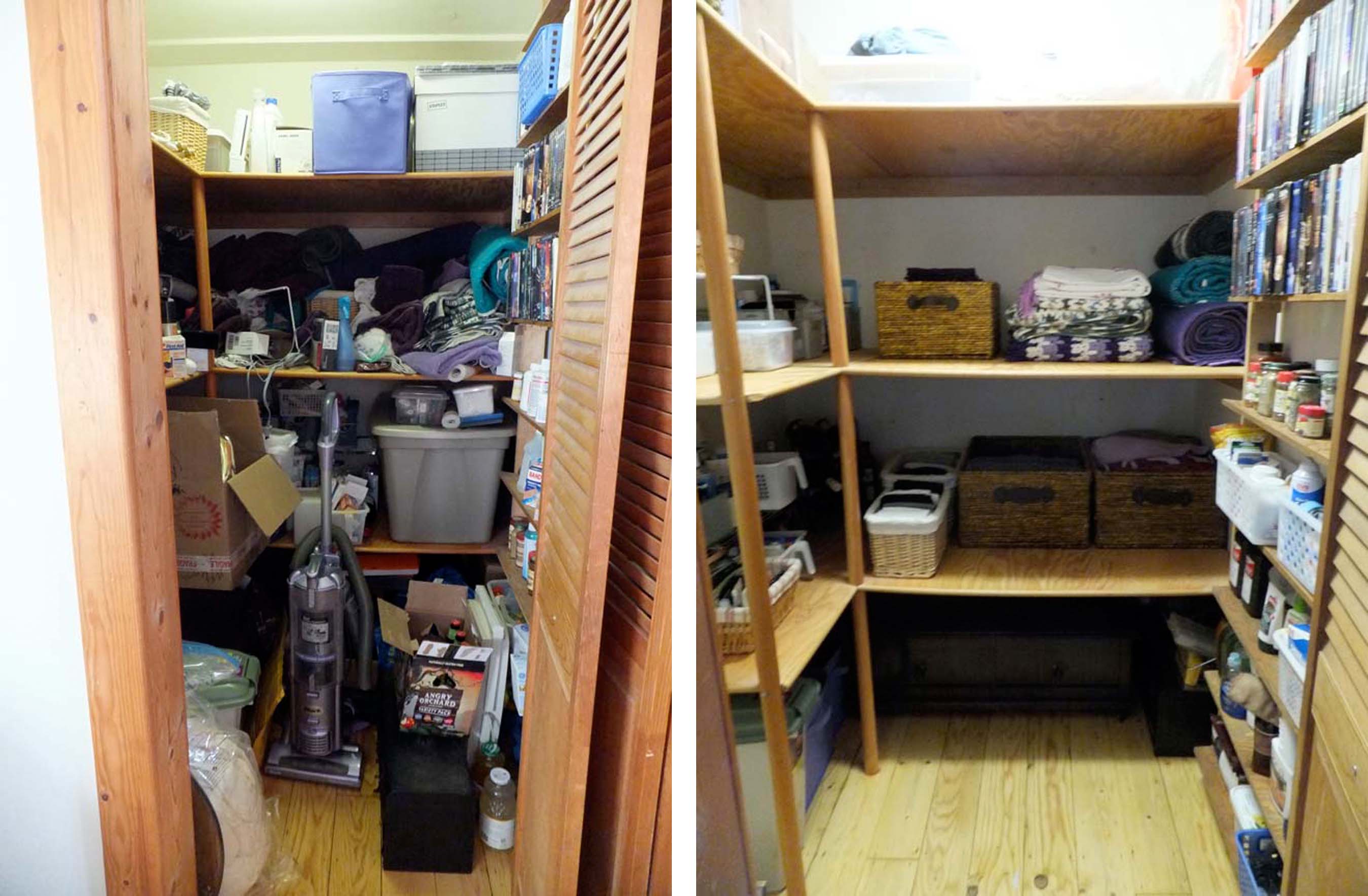
Congratulations to Carrye of Half Moon Bay, a public school teacher who won the Closet Makeover contest! Her closet was a catch-all of things for which there was no space anywhere else in the house. In this closet is a combination of DVDs, make-up and toiletries, cleaning supplies, linens, food and wine, pet food and supplies, tools and hardware, and a little bit more…

THE CLOSET MAKEOVER

BEFORE                                                                                                 AFTER

before_after

Read more about the process…

BEFORE #1

Organize_closet_before_center_web

BEFORE #2

Organize_closet_before_left_web

BEFORE #3

Organize_closet_before_right_lower_web

When I arrived and met Carrye in person, we sat down for a quick goal and task-setting meeting. She let me know that she intended to get rid of a lot of stuff that had been hanging around for too long, so that meant she was ready and willing to be actively involved in serious decision making. I explained my process and level of involvement needed from her to make this a successful mission. She agreed and I got started with preliminary sorting while she tended to other household chores.

I emptied the closet, sorting like items into big Rubbermaid bins I brought along. I brought her back in and got her started looking over a few bins at a time. In the meantime I dusted and cleaned the closet with my personal solution of water, vinegar, and baking soda.

THE CLEAN OUT

Organize_closet_during_center_web

There were great old-timey blankets stored in an antique wooden chest at the bottom of the closet. The blankets were a bit musty from being put away for so long, so I aired them out in the soft sunlight while I chipped away at the closet. Sunshine and a warm breeze will help to remove a lingering musty smell from linens. If the smell persists, they may need to be washed in a vinegar/baking soda solution then hung out to dry in the sun. The sun works wonders for lots of things.

Organize_closet_blankets_web

I wiped down the inside of the chest with the combo vinegar/baking soda/water solution I brought along and let that air dry too.

Organize_closet_chest_open_web

I gave Carrye a little bit at a time to go through, enough to not overwhelm her. I encouraged her to take short breaks regularly, so she can recharge and return with a fresh perspective for each bin of stuff I needed her to make decisions on. This is half of what she eventually let go from the closet. We also got rid of as many cardboard boxes, plastic bags, and big bulky plastic bins as possible.

Organize_closet_donations_2_web

Once we knew what she was keeping, the detailed organizing took place, and…

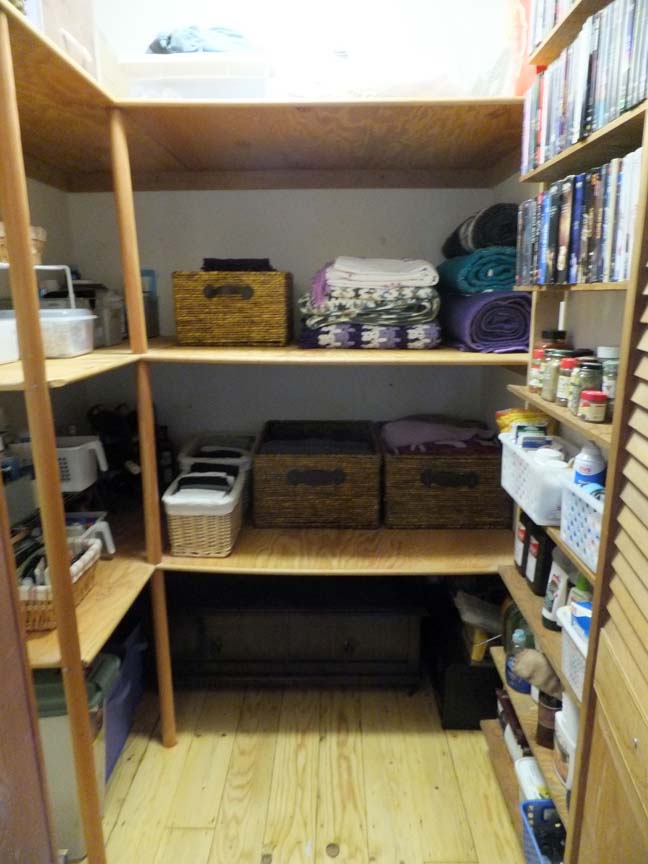
AFTER

Organize_closet_after_center_web

I brought along a few natural baskets I anticipated needing.

Organize_closet_after_3_baskets_web
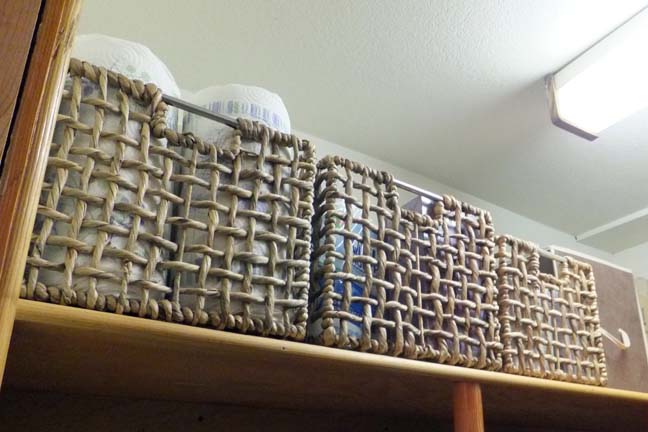
Paper towels and paper bathroom product tucked away yet easy to reach.

Carrye had lots of smaller bins and baskets that I was able to wash with warm water and soap, and reuse. I aired them out to dry in the sun. Plastic needs sunshine love too…look at how peppy and happy they look!

Organize_closet_after_toiltries_close_up_web
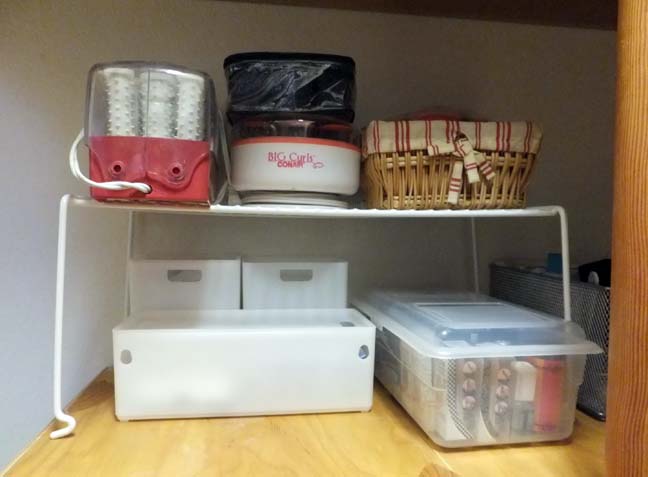
Hair and nail supplies.

Dvds, food, first aid, medicine and supplements, cleaning supplies. All in a top to bottom placement thought out in advance. Dvds won’t get spilled on. Food won’t get contaminated from spilled toiletries or cleaning supplies, etc. (using skills incorporated from Culinary Class 101 here).

Organize_closet_after_small_shelf_web
 

Sheets and towels neatly folded and placed in more natural baskets I brought along. Bigger blankets folded and quilts rolled, which prevents creases and folds from forming on these special, handmade linens. You can go a step further and store quilts in a pillow case if you don’t intend to use them often. Storing them in plastic is a no-no, as they need air to breathe. The plastic can sweat (creating humidity) and some plastic bags may leach colors from dyes and damage the quilt, especially with long-term storage. Anything that the quilt is stored in or on must be acid-free.

Organize_closet_after_linens_web

More organized toiletries using existing bins. Dog food and pet supplies stored together on the floor in matching purple bins to make them easy to differentiate from her personal goods and find.

Organize_closet_after_left_web

THE CLOSET MAKEOVER

BEFORE                                                                                                 AFTER

before_after

____

Tips to maintain an organized storage closet

  • Once things are organized, take a mental note of what you have in stock and where it is placed. Example: if the “dental supplies” bin has three toothbrushes, 2 rolls of dental floss, and three travel size containers of mouthwash, this is likely enough to last and you need not buy more until grabbing the last of any one item to use. Only when you grab the last one, add it to your shopping list.
  • Keep an ongoing list of supplies that need to be replaced. This way, you do not “wonder” if you need something while out at Costco and end up buying ten more of something when you already have nine at home. There should only be one list in one place, such as on the refrigerator where you see it often, or in your cell phone note pad. Once you are on your last of anything, add it to the list, then check it off when replaced.
  • Use the 3/4 full rule. Refrain from overfilling any bin, basket, shelf, or drawer by only filling it 75% maximum so that things don’t squash together, overflow, or spill out. If things are overflowing in a given space, make it a point to use up excess of what you have and maintain only what you need in the immediate time.
  • Assess the closet again in a few months. Put a date on your calendar to remind yourself. Why? Because you’re going see if you still have an emotional attachment to that thing you were hesitant about getting rid of three months ago and kept even though you “kinda sorta” thought you didn’t need it. If you can let it go after this re-assessment, wish it well and send it off. Otherwise, make use of it soon.
  • Toiletries (including make-up, lotions, soaps,) spices, medicine, vitamins and supplements DO expire, even if they don’t have a date. Something to think about when you assess the contents of the storage closet now and again.
  • If you haven’t used something for an entire year or more, seriously consider if you want it to take up valuable storage space for much longer. You can sell it, compost it, donate it to charity or post it for free on Craigslist and let someone else put it to good use.
  • Jut because there is extra space, does not mean it has to be filled.
  • Appreciate what you have. Don’t ignore or abandon it, leaving it in a dark corner to be lonely and unused. Bring it out, put it to use, breathe life into it. What we own is an extension of us. Bring it out of the closet to play!

Do you have additional tips for maintaining this organized closet? Please share by leaving a comment below. Thanks for reading and having fun with me on this closet makeover adventure!

READ BELLA ORGANIZING TIPS, IDEAS & TRAVELS HERE.

Isabella Guajardo, also known as Girl With A Truck™, is a professional home organizer and member of the National Association of Professional Organizers (NAPO). Living in Oakland and Monterey, she travels in her truck to work with clients throughout the SF Bay Area, East Bay, South Bay, Silicon Valley, Santa Cruz and Monterey Peninsula. She shares simple and creative ways to stay organized and stylish while reducing, recycling and re-purposing. Join Bella Organizing on Facebook.

Call (510) 229-7321 to schedule a complimentary telephone consultation. Gift certificates are available.

Categories
Professional-Organizer

Preparing for A Move – What Not To Pack

The more you own, the more there is to think about when preparing for a move. Here are important things to remember before you or anyone else starts to pack.

  • Set aside jewelry, money, important papers or other valuable personal articles in a safe place that is not accessible to anyone entering your old or new residence (including packers and movers). Do not ship these items unless you make written arrangements with the moving company you are using -it is best to carry them with you.
  • Never pack matches, flammables (such as propane tanks) or other dangerous weapons or articles. You should always inform packers and movers of these items and set them aside. Hire help or sort out these items yourself before packing day. Common household articles not accepted for shipping or storage by the Moving and Storage Industry include:

packingandmovingtips-bella-organizingCombustible Liquids

  • Alcohols (Rubbing)
  • Lubricants (Motor Oil)
  • Anti-Freeze Compounds

Corrosives

  • Acids
  • Drain Cleaner
  • Photographic Acids Used in Developing Film
  • Bleach
  • Batteries (Wet or Dry)
  • Water Purifying Agents Used in Swimming Pools

Explosives

  • Fireworks
  • Small Arms Ammunition
  • Flash Bulbs

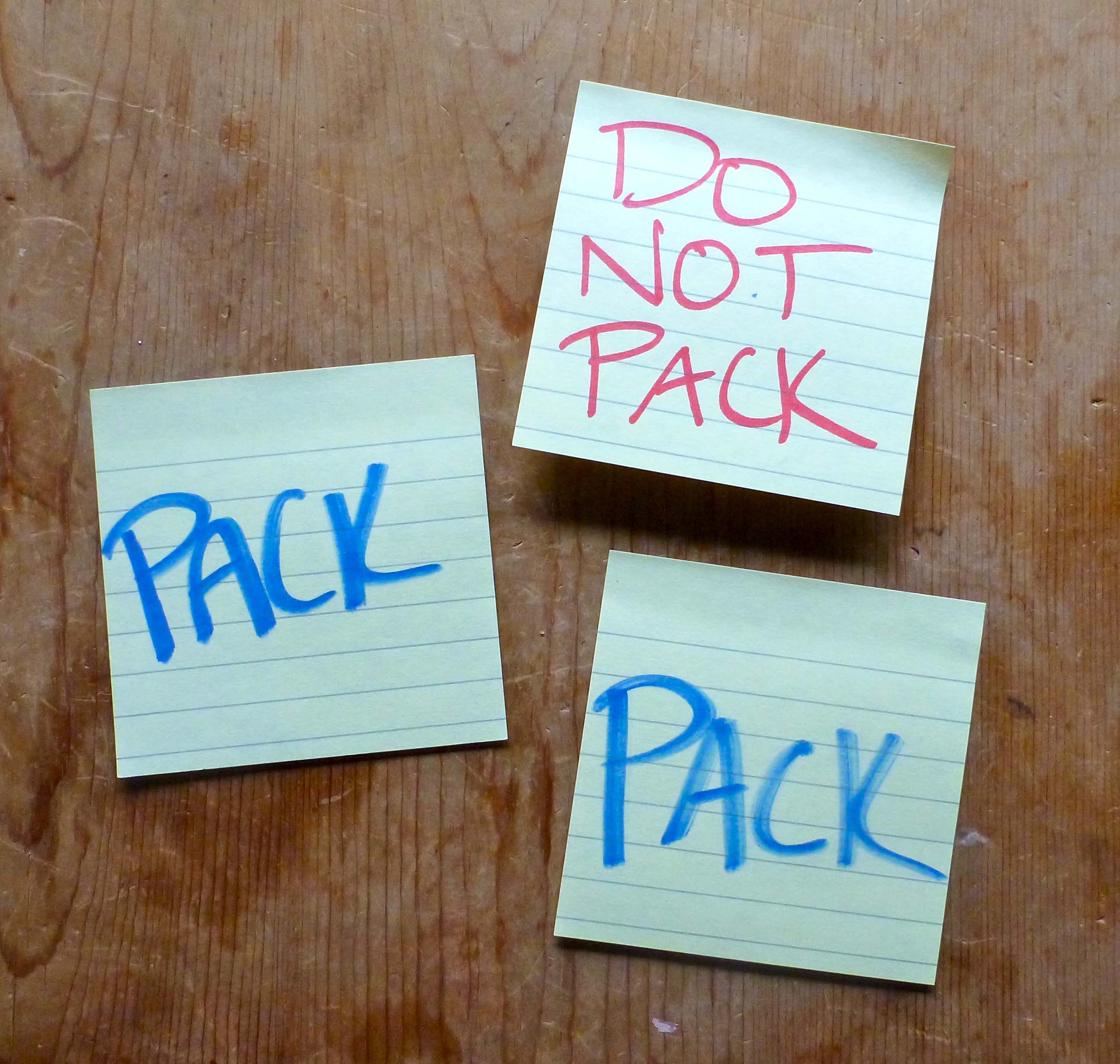
Organize your move with sticky notes

Flammables

  • Lighter Fluid
  • Matches
  • Wood Oil Stains
  • Petrol Chemical Base Garden Sprays
  • Paint or Varnish
  • Paint or Varnish Removers
  • Butane/Propane Gasoline
  • Signal Flares
  • Charcoal Briquettes

Compressed Gases

  • Aerosol Cans
  • Fire Extinguishers
  • Scuba Diving Tanks

Seed, Fresh Fruits or Flowers

Additional packing preparation tips:

  • If taking refrigerators and freezers with you, completely empty, defrost, dry, and wipe them down before moving day. Ice melts into water, which can damage your boxed contents in the truck and create slippery hazards for both you and the movers. You will need to do this yourself, or hire someone (such as a housecleaner) to do it at least 12 hours in advance of the movers arrival. See tips on how to defrost a freezer HERE.
  • You are required to make preparations for disconnecting major appliances (such as gas stoves and dryers), and to provide special services to protect them during the move. You are also required to remove items attached to walls or floors such as draperies and tacked-down carpets. Some moving companies provide these services for a fee, or they may suggest local companies to assist you. Never assume that a moving company is going to do something you ask for last minute, as it may be a service they do not or cannot provide. Anything extra that movers can do for you last minute will take more time, cost more money, and delay your move. Make a “to-do” and “to-ask” list prior to scheduling the moving company.
  • Do not pack items of extraordinary value, such as antiques, art objects, gold or silver articles, etc., without creating an inventory list in advance. Provide this information to the moving company with a declared value for each. Movers may require to pack high value items themselves to ensure they are properly packed for shipping and do not have pre-existing damage.

Hiring packers or friends to help? Be prepared with these tips: Getting Ready for the Packers To Arrive.

____

READ MORE BELLA ORGANIZING TIPS, IDEAS & TRAVELS HERE.

Isabella Guajardo, also known as Girl With A Truck™, is a professional home organizer and a member of the National Association of Professional Organizers (NAPO). Living in Oakland and Monterey, she travels in her truck to work with clients throughout the SF Bay Area, East Bay, South Bay, Silicon Valley, Santa Cruz and Monterey Peninsula. She shares simple and creative ways to stay organized and stylish while reducing, recycling and re-purposing. Join Bella Organizing on Facebook. Gift certificates are available.
Call (510) 229-7321 to schedule a complimentary telephone consultation.