Categories
Professional-Organizer

Week 11 | Bottled Water | 52 Weeks to Downsize & Minimalize

During Week #11, we learn and practice ways to downsize and minimalize the use of disposable plastic water bottles and plastic containers for water. We review the pros and cons of plastic water bottles, what plastic “leaching” means and does, and spotlight alternative water storage and filtering options.

By cutting down the use of plastic bottles, we can:

1) Save money.
2) Save the environment.
3) Protect ourselves from the health repercussions of plastic leaching into drinking water.

water-bottles-plastic

Pros of plastic water bottles/containers  (let me tell you, there aren’t many.)

  • quick and easy storage and travel companion
  • portable reminder to drink water
  • less chance of shattering if banged or dropped
  • a BIG TIME money maker for the plastic water bottle industry (a “pro” for them).

Cons of plastic water bottles/containers  (get ready…)

  • Store-bought bottled water is more expensive than tap water, and 25% of bottled water is from the tap. Companies filter or use ultraviolet light to radiate tap water, then sell it for several thousand times the cost of municipal tap water. The bottled-water industry is so successful, it has beaten coffee, milk, and juice in the number of gallons sold. Only beer and soda surpass it.

tap-water-bottled

“Enough plastic is thrown away each year to circle the earth four times.” ~ EcoWatch

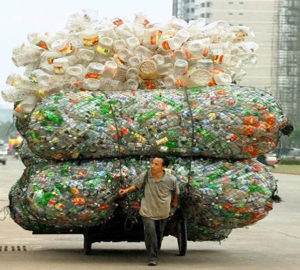
  • What you drink in a few minutes leaves behind plastic trash to linger for a thousand years. The U.S. public goes through an estimated 50 billion water bottles a year, and most of those plastic containers are not recycled.* Humans are not perfect recyclers, and our environment is paying for it. Plastic bottles that get thrown in the trash go into landfills. Toxins from degrading plastics leach into soil and watersheds, which also flow into rivers, oceans and to neighboring communities, states, and countries. In many developing countries where there is not a safe source of tap water (and not-so-strict recycling laws, education, or culture), bottled water is the only option. Imagine the plastic toxins we send to them, and what they send to us…

plastic-water-bottles

  • The creation AND recycling of plastic bottles uses TONS of energy. Plastic bottles – including recycled plastics – are manufactured using high volumes of fossil fuels and other energy. Bottles need to be designed and created, filled, labeled, transported nationwide and internationally in trucks and floatings vessels, keeping them cold in supermarkets and corner store refrigerators…all using more gas, energy, and emitting greenhouse gases. Plastic recycling efforts have improved, but still leave a huge carbon footprint. Watch this video and look closely at the breakdown and manufacturing process that goes into recycling.
recycled-plastic-bottles

  • Despite the hype, BPA-free plastic bottles are dangerous to humans. Considered “safer” if used only once, BPA-free #1 polyethylene terephthalate (PET or PETE) is the most common resin used in disposable bottles. CertiChem found that 70 percent of products that are BPA-free still leach harmful chemicals into food and beverages. As #1 bottles are reused, they can leach chemicals such as DEHA, a possible human carcinogen, and benzyl butyl phthalate (BBP), a potential hormone disruptor. Because the plastic is porous, you can take a swig of harmful bacteria with each gulp if you reuse the bottles, especially when they’ve been exposed to heat (microwaves, left in hot cars) or cold (refrigerators and freezers), or sit around for a long time (stored water bottles, emergency preparedness supplies). So much for wanting to be “green” by re-using a disposable plastic water bottle over and over and over again…

plastic-codes-water-bottles

How to Identify BPA Products
BPA products have recycle codes on their bottoms with the #3 or #7.

“Plastics labeled ‘1,’ ‘2,’ ‘4’ and ‘5’ are the safest,” says Dr. Whitney Christian, a health scientist for Cardno ChemRisk. “However, avoid reusing plastics labeled ‘1’ and ‘2,’ and do not use them with warm or hot liquids.” Avoid eating foods or drinking beverages stored in plastic containers if pregnant or nursing because you could pass the leached chemicals to your baby.

How to Ensure Safety

Use glass bottles and stainless steel water bottles and containers. Although glass bottles might not always be practical, they are a much healthier alternative to plastic water bottles.

Another safety method is to avoid putting plastic bottles, sippy cups or food storage containers in the microwave or dishwasher, the freezer, or exposing them to sunlight. “Leaching of chemicals from plastics can also happen from repeat use and from scratches that accumulate over time,” says Dr. Christian.

The Breast Cancer Fund also recommends that consumers limit exposure to toxins in BPA, BPS and other alternatives by using glass, stainless steel and food safe ceramic containers. They stress that it is not safe to microwave in plastic.

Tips to Store Emergency Water

  • Use wood rain catchment barrels, and glass or ceramic storage containers.
  • If using plastic or “resin” water barrels, or storing bottled water in plastic, rotate the water every six months to prevent toxic leaching; never let the water sit inside a plastic container for longer than 6-12 months. Rotate the water by using it to quench non-edible plants and trees. Use fresh rain water to refill catchment systems each season.

A Few Water Filtering Options for Tap Water Drinkers

For home, one option is the Soma water carafe and filter. It’s a sleek, glass carafe with a fully biodegradable filter made from coconut shells. Soma sends a new filter every 60 days. Visit Food & Water Watch for information on in-sink filtration systems. Soda Stream is an option for sparkling water.

Change is simple and makes a real difference. We can teach generations how easy it is to be plastic water bottle-free, just like we used to be.

“93 percent of American ages age 6 and older test positive for the plastic chemical BPA. BPA-free is not safer.” ~EcoWatch

*Bottlemania: How Water Went on Sale and Why We Bought It by Elizabeth Royte (2008) 

Bella_Organizing_Best_Professional_Organizers_San_Francisco_Oakland_Berkeley_silicon_valley_montereyIsabella Guajardo, founder and owner of Bella Organizing, is a San Francisco Bay Area professional organizer offering home organizing, interior redesign, and residential move management services throughout the Greater San Francisco Bay Area. Call (510) 229-7321 or email info@bellaorganizing.com for more information. Gift certificates are available.

Follow our projects on: Facebook | TwitterInstagram | Houzz

Counties we serve:

Alameda | Contra Costa | San Francisco | Marin | Sonoma | Napa | Santa Clara | San Mateo | Santa Cruz | Monterey
Categories
Professional-Organizer

Week 6 | 52 Weeks to Downsize & Minimalize | Let Go of Loneliness

Whether or not you have lots of family and friends, lack of depth in at least a few relationships can leave a gaping hole in the spirit that leads to loneliness. Could focusing on the quantity of Facebook friends we are connected to, excess eating, unhealthy drinking, prolonged sleep, and/or the collection of “stuff” be signs of trying to fill an emotional void in our lives? Perhaps what the human spirit truly longs for is an abundance of meaningful relationships with other people.

Today I interview Berkeley-based psychotherapist Keely Burke, and gather favorite quotes and links to articles from leading psychologists and popular Buddhist teaching so that we may delve deeper into the question “What is Loneliness?” and gather tips on ways to both break free from, and tenderly acknowledge with loving kindness and resilience, that uncomfortable feeling that visits us throughout life.

What is loneliness?

keely_burke_berkeley_marriage_family_therapist
Keely Burke, Psychotherapist

“I see loneliness as both a state and a feeling.  I think of loneliness as a painful experience for people, when they are either alone or with other people, but aren’t feeling a sense of connection. Emotions associated with loneliness are often sadness, anger, anxiety, dread, fear, and terror. Loneliness can be quite painful and as with other difficult emotions, are one people can want to get away from with coping behaviors such as avoidance and addiction.

Loneliness can range from a natural and normal feeling that people sometimes have when the disconnections in relationship happen. Also, too much solitude and isolation can create the feeling. When paired with historical or current trauma experiences, loneliness can become extremely difficult. Neglect or emotional, physical, or sexual intrusion by caregivers and others early in life can make connection or lack of connection to people quite difficult.” Keely Burke, Psychotherapist, Licensed Marriage and Family Therapist, & Expressive Arts Therapist (Berkeley, CA)

*****

guy-winch_phd_loneliness
Guy Winch Ph.D.

“Loneliness is a personal and subjective experience, one which is defined not by the quantity of our relationships but by their subjective quality. Not all lonely people live in isolation. A person might have many friends around them or live with a partner, yet still feel the deep ache of emotional or social isolation.” – Guy Winch Ph.D.

In his book and article, Guy Winch discusses how loneliness can begin gradually, usually as people we are close to leave us in one way or another, through a relationship break-up or death, over an argument, moving away, or when they get married and start a family of their own. Particularly as we get older, social circles cease, and we increasingly find ourselves spending time alone.  Read more at: Psychology Today

Learn how to spot the symptoms of Loneliness in yourself and others.

*****

Loneliness or Sweet Solitude?

“Language…has created the word ‘loneliness’ to express the pain of being alone. And it has created the word ‘solitude’ to express the glory of being alone.”  – Paul Tillich, Theologian

***

“I thought about [the Buddha’s] first and second noble truths—that we suffer when we desire for circumstances over which we have no control to be other than they are.” – Toni Bernhard J.D.

Toni Bernhard J.D.

In her article “How To Turn Loneliness into Sweet Solitude,” Toni Bernhard writes about a time she became increasing lonely during her chronic illness, while bedridden and unable to socialize as she did when she was a college professor. She turned to the teachings of Buddha, through which she learned how to embrace being alone as a state of sweet solitude.

***

Priyananda_joseph_buddhism_loneliness
Priyananda

Priyananda shares the Buddhist teaching of Sarvananda, and how learning to accept aloneness is ‘where the spiritual life begins.’ ‘Buddhism challenges us to train ourselves to be more and more at ease in our own company,’ and ‘to try and be with ourselves without distraction.’ To be comfortable with ourselves, in our own skin, without the presence of others to fill the physical void, fill the hole, and make time pass. ‘Distrusting our capacity to be alone, we too quickly look to others to save us, often from ourselves,’ Sarvananda says. ‘We become addicted to other people.’

Sarvananda_solitude_lonelinessYet, Priyananda explains, it’s when we face up to being alone that we begin to expand our thinking and begin to realize how truly we are connected, and need to be connected, with others. ‘Although we are essentially alone, we are also essentially related,’ Sarvananda explains. ‘As Buddhists, we are practicing in a context: with others and for others. The way out of loneliness or isolation, then, is to love more deeply. It is in going beyond the ego that we also go beyond loneliness and isolation.’ Read more here.


Pema_Chodron_loneliness
Pema Chodron

Delve deeper into the Six Kinds of Loneliness with Buddhist teacher Pema Chodron.

*****

Love More Deeply

Practice reconnecting with and loving yourself first. Psychotherapist Keely Burke* suggests that “Learning to self soothe and experience the emotions around loneliness are the ideal. Loneliness like any other emotion comes and goes like the rhythms of nature. Life experience creates times of loneliness. If we can stop resisting the emotion and just feel it, there can be a processing of the feeling and then it moves on through us leading to the next emotional state.”

*Keely Burke is a Berkeley, California based Psychotherapist, Licensed Marriage and Family Therapist, and Expressive Arts Therapist. Read more about Keely and her upcoming workshop titled Creating Self-Love at the Center for Creative Growth’s website.

When you’re ready to start loving others more deeply, begin by rekindling friendships and creating new ones. 

  • Connect with an different old friend, acquaintance, or family member each day – in person or through a phone call, as opposed to a text message or simply commenting on their social media page. Stay positive and optimistic in your approach. Make a date to go for a walk, meet for lunch, or offer a couple hours to help with something they need done around the house. Understand that the older we get, the busier we are. Don’t take it personally or let it get you down if someone is not available right away. Schedule an appointment for a get together at a later date, and follow up on it. Continue calling different people to reconnect.
  • Participate in a community event in need of volunteers. Don’t worry if no one knows you, or if you show up alone. It only takes one person to make a big difference. Experiment with diverse volunteer events. When you connect with the right group of people, meaningful relationships start to develop.
  • Join a Meet-Up group – a safe place to get together with total strangers doing things you commonly enjoy. Hiking, writing, mother’s groups, men’s groups, meditation, dodge ball, dog walking, you name it, there’s something out there for you. Most Meet-Up’s are free, and an excellent way to be active and learn something new when on a mission to discover great people and get practice at developing meaningful relationships.
Bella_Organizing_Best_Professional_Organizers_San_Francisco_Oakland_Berkeley_silicon_valley_monterey
Isabella Guajardo

This article was put together by Isabella Guajardo, founder and owner of Bella Organizing, a San Francisco Bay Area professional who offers meaningful home organizing, interior redesign, and residential move management services throughout the Greater San Francisco Bay Area. Call (510) 229-7321 or email info@bellaorganizing.com for more information. Gift certificates are available.

Follow our projects on: Facebook | TwitterInstagram | Houzz

Counties we serve:

Alameda | Contra Costa | San Francisco | Marin | Sonoma | Napa | Santa Clara | San Mateo | Santa Cruz | Monterey

Categories
Professional-Organizer

Week 3 | 52 Weeks to Downsize and Minimalize | Clear the Skeletons

“Skeletons in the closet” is a colloquial phrase and idiom used to describe a hidden shame or a secret someone does not want revealed out of fear that it would have a negative impact on the perception of them by others. It can also mean not being ready to emotionally let go of something.

Whether you are holding onto a deep, dark secret or simply stuffing your mess in the closet when company arrives, it’s time to clear out, clean up, and get things organized.

What kind of skeletons do we hide in the closet? Here are examples:

  • The mess that has no home and gets scooped up and stuffed into a closet, the bedroom, or the garage when company comes over.
  • The old diaries and journals that tell stories no one else should know.
  • Crutches, splints, and braces held onto for years, leftover from old injuries, in anticipation of injuries to come.
  • Bad memories or a broken heart for which steps have not been taken to purge, heal, and move on.
  • Old pictures, journals, and love letters that only make you sad to see and read.
  • The belongings of the children – now grown adults off to college or married with their own family – which remain boxed and stored in your house, and prevent you from making better use of the space it fills.
  • The belongings of deceased relatives you’ve inherited and procrastinated on dealing with.
  • The bills gone unpaid, and the resulting bad credit score that’s been holding you back from financing a car or purchasing a house.

What kinds of skeletons are in your closet?

Clear_skeletons_closet_bella_organizing_professional_organizerStep One

Write out a list of skeletons you have been holding onto and are ready to clear out of the (figurative or literal) closet.

Step Two

Prioritize the list, and write out how you’re going to clear one or more of them out of the house and your life this week.

Step Three

Get it done. Actively join me for Week 3 – Clear the Skeletons – 52 Weeks to Downsize & Minimalize, and clear them out for good.

An example from my personal list:

A skeleton in my closet is an old journal I’ve held onto for 7 years in which I wrote about things going on in my life during the years 2009-2010, which were not the best of times. Although it makes me sad to read the entries, I hold onto the journal because it is a hand-made gift from the ex about which many of the entries are written.

What am I going to do about it?

It’s time to purge the negative past for good and have a journal-burning party.

Here are examples shared by clients (who agreed to have them post anonymously):

Skeletons in my closet are the tons of old kids toys, books, clothing, and art projects I’ve held onto for years that are stuffed into boxes in the garage. The kids are grown and no longer play with or wear them. I’ve done nothing about sorting through the art, half of which I know is junk. But I’m afraid to let go. I love my kids and have such great memories of when they were little. They are adults now and don’t want any of the stuff for their own kids. The stuff has claimed my life and my garage, which is now completely cluttered with all their old stuff to the point where I can’t park my car, and wouldn’t dare let anyone into it.

What am I going to do about it?

I’m going to sort through each box, one by one. It will take me a while, but one box at a time is manageable. I will sort through at least one this week. I’ll probably cry a lot, but it will be over the good memories. I will take photos to preserve the memories, and donate the rest to families in need. I’ll only keep 25% at the most. ~ Anonymous

~~~

I own over 200 pairs of shoes. Very expensive shoes that range from $200-$2000 each. For a long time I took care and had them professionally organized into clear shoes boxes, each with a photo of the shoes taped on the front of the box so that I can easily see what they are. The boxes have been neatly stacked for years in the closet. I haven’t worn any of them.

I’ve since collected more shoes, and lost interest in putting them into neat little boxes with pictures, so now they are in the boxes they originally came in. It works fine because it protects them from dust and dirt, but again, they are out of sight and out of mind, and I hardly wear any of them.

I’m getting old, no longer can wear high heels, and can no longer afford to splurge so wildly. The thought of donating them scares me. I paid so much for them! But I have to get real, and need to get rid of them.

What am I going to do about it? 

I’m going to consign them. Whatever is not accepted for consignment, I’m simply going to donate to charity. They will not come back home with me! It will be hard, but they would only stay stored in my closet and bedroom forever. It’s time to just let them go. ~ Anonymous

What skeletons are YOU clearing out of your closet and life this week?

Join me for Week 3 – Clear the Skeletons – 52 Weeks to Downsize & Minimalize, and clear them out for good.

~~~

Bella_Organizing_Best_Professional_Organizers_San_Francisco_Oakland_Berkeley_silicon_valley_monterey

Isabella Guajardo, founder and owner of Bella Organizing, is a San Francisco Bay Area professional organizer offering home organizing, interior redesign, and residential move management services throughout the Greater San Francisco Bay Area. Call (510) 229-7321 or email info@bellaorganizing.com for more information. Gift certificates are available.

Follow our projects on: Facebook | TwitterInstagram | Houzz

Counties we serve:

Alameda | Contra Costa | San Francisco | Marin | Sonoma | Napa | Santa Clara | San Mateo | Santa Cruz | Monterey

Categories
Professional-Organizer

Week 2 | 52 Weeks to Downsize and Minimalize | Setting Intentions

Set Intentions for The New Year & Life

The following are three ways to plant the seeds of Intention for Success. I recommend practicing all three for best results.

No. 1: Create a free-writing journal of what you want, why, and what you intend to do to live it. The journey from the mind down the path through your heart and onto the page is an important one. Save you writings digitally in a folder on your desktop, in the notepad of your smart phone, or in a paper journal, and revisit weekly or monthly to be reminded of your intentions.

No. 2: Write one or two short sentences for each Intention -as if they are happening now- and place them where you will see them daily. Some ideas include on the desk, refrigerator, computer desktop screen, the mobile phone home screen. There may be days you are too busy to notice them, but they are still there, and soon enough you will see your intentions and be reminded.

Here are two Intentions I set for myself this week

  • I read lots of library books, my vocabulary is expansive, and conversations with friends, colleagues, and strangers are fun and exciting!
  • I wear my best and most comfortable shoes. I only need a minimal amount of shoes, and am donating the rest to people in need.

(Read Week #1 What and Why to learn the juicy details of why I set these intentions.)

No. 3: Create a vision board of your Intentions and what it looks like to live the life you want. This can be a sketch, painting, or collage of pictures and written intentions on a 8.5×11 piece of paper or large poster board. Place it where you will see and be reminded of your vision daily. See #3 in this link for a sample vision board.

Next Step: Live life. Once you plant the seeds of intention, and place reminders for yourself around your home, it’s time to let the life you want miraculously unfold.

What Is Intention?

Intention is like a seed. You grow it like a plant. It thrives when cultivated and cared for, and wilts when neglected, but never truly dies.

Intention lives in the heart. Once you set an intention from the heart, it is always there. You plant the seed. There may be days, weeks, and months you forget your intentions, and it may seem as if they are disappearing from your life, but they are still there.

Memory allows us to reflect on the past, and to remember our intentions planted from the heart. Once you recall your intentions, the heart begins to stir. When you begin to act on your intentions, they start to grow and thrive. The more you exercise your intentions, the stronger the heart grows. Soon you will live them out every day, without thinking much about them, because your heart’s intentions are strong and become a way of life. The more you feed your intentions, the more they will feed you. It is a strong, symbiotic relationship that gives you nourishment and strength to be true to your intentions every day. It becomes an unconscious way of life.

Goals focus on achievement. Intentions provide integrity and unity that build a foundation for a way of life.

Setting_intentions_bella_organizing_52_weeks_downsize_minimalize

Setting intentions is different from goal setting, as it’s not oriented toward a future outcome. You set intentions based on the understanding of what matters most to you and make a commitment to align your present actions with them. It is a practice that focuses on the relationship between you and the seeds you plant. Through cultivating your intentions, you learn to make decisions about ways to grow your seeds without getting caught up in the idea of reaching a destination. You are not expecting yourself or the seeds to be perfect, but rather allowing the flexibility of learning the beautifully diverse ways of being and doing, while working toward the healthy growth and development of your heart’s intentions.

My Personal Intention for Happiness

“Happiness is not a state to arrive at, but a manner of traveling.”  -Margaret Lee Runbeck

This popular quote has served me in life for decades. When I first read it, I connected with it deeply. It soon became the signature quote in my personal email, and is the quote I use to this day in my personal Facebook bio. I place it where I see it often so I can always recall what matters to me most and share with others the idea that happiness is not an end goal, but rather a way of living.

Seeing this quote reminds me to let go of negativity and move on. I do what I need to be happy in life, and at times it means passing up, or re-directing myself, out of the path of toxic people and situations that build up along the way.

I am no longer on an endless search for happiness. I own it.

I set the intention for happiness in life, and exercise it regularly through positive thoughts of gratitude for all good things that have happened in the past, or are yet to come. Life is not perfect and there are occasional bumps along the road, but if there were not bad days I would take for granted all the good. This contrast is a blessing and reminder for me to appreciate the beauty of happy times in the past and present, and what I have to look forward to on the journey to come.

I know what happiness is.

When a day is bad or things go wrong, I recall the happiest times in my life, and through that, know what needs to be done to lift myself out of the ditch I’ve fallen into. Perhaps the mud in the ditch is a skin-nourishing mud bath blessing in disguise. Lifting yourself out of the ditch starts with perspective and attitude, is sugared by reflection and appreciation, and expands from there. I need only to remind myself to keep moving.

Bella_Organizing_Best_Professional_Organizers_San_Francisco_Oakland_Berkeley_silicon_valley_montereyIsabella Guajardo, founder and owner of Bella Organizing, is a San Francisco Bay Area professional organizer offering home organizing, interior redesign, and residential move management services throughout the Greater San Francisco Bay Area. Call (510) 229-7321 or email info@bellaorganizing.com for more information. Gift certificates are available.

Follow our projects on: Facebook | TwitterInstagram | Houzz

Counties we serve:

Alameda | Contra Costa | San Francisco | Marin | Sonoma | Napa | Santa Clara | San Mateo | Santa Cruz | Monterey