
Categories
Professional-Organizer

Declutter the Wardrobe Closet

Say farewell to what you don’t need and magically create space that makes cleaning, organizing, and finding things easier.

When I acquire clothing, I have a rule to let go of as many as I bring in to make room for the new and stay uncluttered. I reinforce this rule by only owning a certain number of hangers (I hang 90% of my clothes.)

Let it go when:

  1. It’s been worn to the point that it is fading, pilling, stretching, or tearing. Why stroll around in public with a t-shirt that’s old and raggedy? The two old t-shirts I own are for gardening and dying the hair. If there’s something waiting to be mended and it’s been waiting a long time, it’s time to get it done or let it go.
  2. It has not been worn for an entire year. If a piece of clothing has not bedazzled the body over the last winter, spring, summer, nor fall, it likely never will. This includes those “skinny” clothes; the things we keep telling ourselves year after year that we will fit back into someday.
  3. It is no longer your color, size, or style. Why wear something and get annoyed every time you put it on? Not your color? Not tailored for your body? Just a little too tight or baggy? If it doesn’t make you feel fabulous or fit just right, are you ready to take it to the tailor and pay to get it fixed?

“Well…I kinda like it…but….”
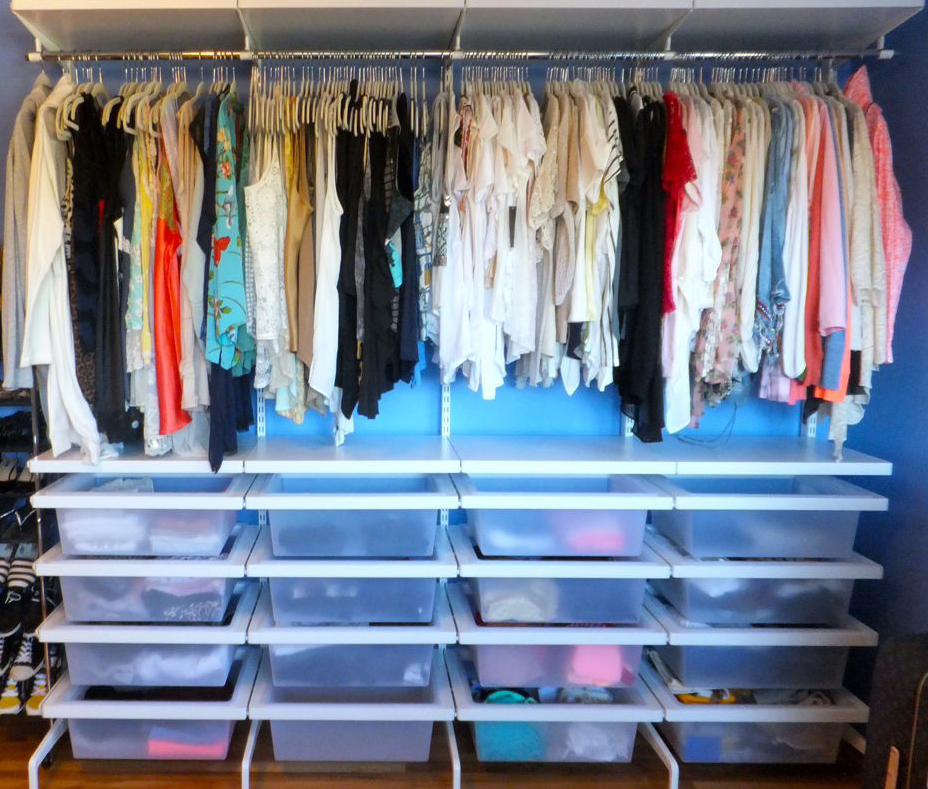
Let’s get started…

Step One – Declutter the wardrobe closet & dresser drawers

  • Prepare a nearby surface on which to place clothes. A clean, made bed will do.
  • Have on hand plenty of trash or paper bags for donations or items to consign.
  • Prep a bottle of all-purpose cleaner or mild soap, a clean sponge or rag, broom, and mop or vacuum cleaner.
  • Grab a pen and pad of paper for notes or use the notepad on your cell phone.
  • Go through the hanging clothes and immediately remove the absolute “must go’s” first. Put what you no longer want in bags marked for “Donations” or “Consignment/Sell” bags. Leave hanging what you want to keep. Set aside the “maybe’s.”
  • Try on the “maybe’s” if you have time. If you cannot decide now, re-assess them again in a few months.
  • Do the same for clothing on shelves and those that have toppled to the ground. Go through dresser drawers and anywhere else you keep and store clothing, socks, and undergarments. Purge the old, worn, and unwanted. If you need help seeing the truth about the condition of something, call in a friend, housemate, or family member for assistance.

Step Two – Clean

  • Clean inside the closet and dresser drawers and sweep, mop, or vacuum while you’re here. So many dust bunnies! Dust is made up of dead skin cells, pet hair, pollen, and dirt you’ve trekked in on your shoes from the outdoors, amongst other things.

Step Three – Hang, Fold, and Organize

  • Hang as many clothes that comfortably fit into the closet. This includes tank tops, workout tops, and lingerie if there’s room and enough hangers. Hanging keeps things neat, wrinkly free, in sight, and easy to access. Arrange clothes like with like and in order: tanks (toward the front), sleeveless, short-sleeve, long-sleeve, sweaters, jackets (toward the back,) etc.
  • Neatly fold or roll clothes that go back into drawers, bins, or baskets. Here are tutorials for tips on How To Fold T-shirts, long socks and leggings, yoga pants.
  • Take an “After” photo of your fresh and clean closet and dresser drawers.

Considering selling or consigning unwanted clothing and accessories? Read about my favorite places to do that!

Ready to go a step further with closet organization? Read my blog on how to maximize closet space with hangers. 

Rolled jeans in a basket...my favorite!
Rolled jeans in a basket.

Bella_Organizing_Best_Professional_Organizers_San_Francisco_Oakland_Berkeley_silicon_valley_monterey

Isabella Guajardo, founder and owner of Bella Organizing, is a San Francisco Bay Area professional organizer offering home organizing and residential move management services throughout the Greater San Francisco Bay Area. Call (510) 229-7321 or email info@bellaorganizing.com for more information. Gift certificates are available.

Categories
Professional-Organizer

Declutter the Medicine Cabinet

Declutter First, Organize Next. 

Discarding what you do not need is key to creating valuable space that will make cleaning and organizing easier. Let go of the old, expired, outworn, used up, what upsets you, what’s no longer your style, and that which takes up space you need for something more meaningful. It’s time to say goodbye and move on…

 Declutter the Medicine Cabinet
medicine_cabinet

Step One 

  • Prepare a nearby tabletop surface on which to place things when removing them from the cabinet. Avoid bending down and putting items on the floor whenever possible (saves the back).
  • Gather one or more paper grocery bags for discards. Label one “Hazardous Waste” and another “Donate” (for items still in good condition that you plan to give away.)
  • Prep a bottle of all-purpose cleaner or mild soap, and a clean sponge or rag.
  • Grab a pen and pad of paper for notes, or use the notepad on your cell phone in case you come up with a thing or two for your “To Do” list.
  • Open the medicine cabinet and take a few “Before” photos.

IMPORTANT REMINDER: Old and expired medicine AND vitamins is hazardous waste, and can turn into something potentially dangerous. You can’t just flush them down the toilet or toss them in the trash. Take the following steps and avoid putting anyone or anything – people, kids, pets, fish in the ocean – in danger.

earth_911_logo

Drop them off…

One of the safest ways to dispose of old medicine and vitamins is to take advantage of drug drop-off days your city or local community organizations host throughout the year. The U.S. Environmental Protection Agency recommends drop-off events as the first choice of disposal for over and under the counter drugs, including vitamins. Do an internet search for ones near you or go to Earth911.com for independent drop-off locations. When dropping off anything with your personal information on it, be sure to black out your name and address with a marker. DO NOT black out the drug name, since hazardous waste facilitators need to know what it is. And DO NOT mix a lot of different drugs into one small unmarked bag, for the same reason.

Take them back…

Take unwanted and expired drugs or vitamins back to the store where you bought them if your city or town doesn’t hold drop-off events or if there is not a household hazardous waste collection center near you. If the store has an on-site pharmacy, the employees may be able to properly dispose of them. Speak to your local pharmacist about it.

Do not ever, ever, EVER…

Do not flush old or expired medicine or vitamins down the toilet, cautions the EPA and FDA. While this is a high concern with prescription medications, vitamins can also leach into the water supply and cause safety risks. Don’t dispose of them down drain pipes nor empty them into a garbage or compost bin. Children and animals can get into and eat them.

Lots of other things are stored in medicine cabinets, and many do not have expiration dates. These can include hairspray, hair gel, toothpaste, lotion, face toner, contact lens solution, sunscreen, deodorant…all of which should be considered for disposal, too. How old are they? Do you ever use it? Do you even like it? If it does not have an expiration date and you’ve owned it for more than two years, consider it old. If it’s not face or body soap, nor earth-friendly cleaning fluids meant to go down the drain, it should not go down the drain. Play it safe and place anything else old and unwanted into the hazardous waste bag. Personally, I consider anything made with scientifically named chemicals hazardous waste, and always include it in my next visit to the household hazardous waste center. If anyone’s going to dispose of these things the safest way possible, it’s them.

Now that you know how to handle the discards…

  • Pick up each item in the medicine cabinet and find the expiration date. If it’s expired, it goes into the “hazardous waste” bag. Don’t take chances with old vitamins, medicine, or anything you put in or on the body.
  • Place anything you are keeping on a nearby surface for later.

Step Two 

Clean 

  • Inside and out, wipe the empty medicine cabinet with a wet and warm, soapy cloth. Regular cleaning will keep it in good shape. Allow surface to dry completely before putting things away.


Step Three 

Put Things Back and Organize

  • Return what you keep back to the cabinet, place like items near each other, labels facing forward: medicine, vitamins, hair products, face products, etc.
  • Take an “After” photo of your freshly organized medicine cabinet.
Was this a quick and easy project for you? Are you motivated to declutter more from the bathroom? If so, tackle all the shampoos, conditioners, soap, make-up, and toiletries under the sink, in the shower, or stashed in other areas of the home.

Bella_Organizing_Best_Professional_Organizers_San_Francisco_Oakland_Berkeley_silicon_valley_montereyIsabella Guajardo, founder and owner of Bella Organizing, is a San Francisco Bay Area professional organizer offering home organizing, interior redesign, and residential move management services throughout the Greater San Francisco Bay Area. Call (510) 229-7321 or email info@bellaorganizing.com for more information. Gift certificates are available.

Categories
Professional-Organizer

Declutter Pantry & Food Cabinets

Decanting Pantry Food


declutter

1. to remove mess or clutter from (a place).

2. to organize and prioritize (one’s commitments, material possessions, etc.)

3. to let it go

Declutter First, Organize Next. 

Pulling out what you no longer want is key to creating space and will make the organizing process smoother. Whether it’s clothing from a hanger, shoes from a rack, books from a shelf, paper from a filing cabinet, or toys from a bin, it’s time to make decisions on the things you are ready to let go. Focus first on decluttering. When the unwanted is out of the way, begin cleaning and organizing.

*** Read both steps before getting started, and choose how you will like to proceed. If you have a lot of food to go through and are limited on time, break the process up into the DECLUTTER step now and the CLEANING & ORGANIZING step later. ***

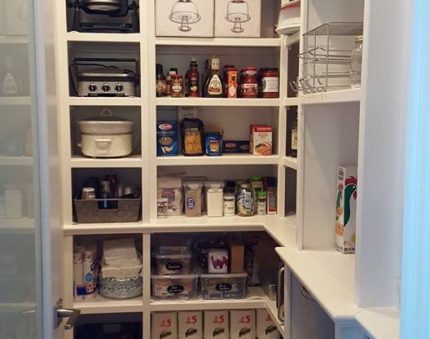
pantry_bella_organizing

Step One

Declutter the Pantry and Food Cabinets

  • Take a “Before” photo of the pantry or food cabinets.
  • Have on hand plenty of plastic trash or paper bags for 1) trash, 2) recycling, 3) compost 4) give away/donate items
  • Prep a bottle of all-purpose cleaner or mild soap, and a clean sponge or rag.
  • Grab a pen and pad of paper for notes.
  • One area at a time, pull out the old and expired food from the kitchen cabinets, pantry, refrigerator/freezer, even the emergency kit (make a list of what needs immediate replacement in the kit.) You may have heard that labels offer “suggested” expirations, but are you willing to take that chance?  
  • Compost expired food and recycle the packaging. If you have non-expired, non-perishable dry food you want to give away, set it aside in the “donate” bag. 
  • Make note of what you are buying too much of and prevent future waste.

Step Two

Clean and Organize the Shelves & Cabinets (can be done the same day or another)

  • If you didn’t already take everything out during the declutter process, do it one cabinet or shelf at a time. Place on a nearby table or countertop surface. Start sorting and place like with like. Your brain is making an important mental note of what you own.
  • Sort like items – soups, grains, beans, breads, snack foods, baking items, spices, breakfast items, drink (tea, coffee, cocoa, etc.) Keep like with like to find things faster and avoid buying duplicates.
  • Wipe empty food cabinets and pantry surfaces with a wet and warm, soapy cloth or all-purpose cleaner. Crumbs and goop accumulate over time, like on that bottle of honey. Keep ants and critters from sniffing out the goods and protect your cabinets with regular cleaning. Allow to completely dry before putting things away.
  • Put away like items together, labels facing forward when possible. Think “grocery store display.”
  • Take an “After” photo of your organized pantry & food cabinets.
Feel like getting a little more organized around the kitchen? Read up on how to make a Drink Zone.

Bella_Organizing_Best_Professional_Organizers_San_Francisco_Oakland_Berkeley_silicon_valley_montereyIsabella Guajardo, founder and owner of Bella Organizing, is a San Francisco Bay Area professional organizer offering home organizing, interior redesign, and residential move management services throughout the Greater San Francisco Bay Area. Call (510) 229-7321 or email info@bellaorganizing.com for more information. Gift certificates are available.
Follow our projects on: Facebook | TwitterInstagram | Houzz

Counties we serve:

Alameda | Contra Costa | San Francisco | Marin | Sonoma | Napa | Santa Clara | San Mateo | Santa Cruz | Monterey

Categories
Garages Professional-Organizer

Tips to Get the Garage Organized

Fremont, CA Garage

One of the toughest areas to get and keep organized is the garage. It is a catch-all and living “to-do” list. A multipurpose nature coupled with being out-of-sight, out-of-mind makes a garage prone to clutter. No space could be more useful when utilized well.

Perhaps you’re ready to hit the slopes and want to get on the road without having to dig through piles to find the cold-weather gear. Or you have a special project in mind but never get to it because you lack the space to work. Read our tips on the blog for ways to get and keep the garage organized, and you’ll be on the way to having a functional storage and work space roomy enough to throw a dance party in. 

If after reading, you still feel like there’s too much to do, give Bella Organizing a call. We’ll get the garage de-cluttered and set up in no time.

San Ramon, CA Shelf Installation

Garage Organizing Tips

Don’t let cardboard boxes and packaging stockpile in the garage. Many people say they want to keep packaging in case a recent purchase needs to be returned, repaired, or for when they move. If you value your space, recycle product packaging immediately after its return or repair insurance date expires. If you one day need a box for it, you can get an equivalent at a local hardware or office supply store, or free from a supermarket or Craigslist. Your personal space is valuable, don’t clutter it with packaging you only anticipate needing.

Sweep the garage once a week. Each go-over will pick up a little more left over from last time. This is a great way for kids to earn allowance. Have a garage-sweeping checklist clipped on the wall to follow when taking out the trash and mark when done.

Keep things off the floor. Critters love dark, cozy places. Prevent piles on the floor and other exposed surfaces to keep pests from returning to make your favorite things their love and poop nests.

Use heavy-duty bins with secure lids to store your most valuable items. Rodents LOVE eating through cardboard to poop on your precious photos of grandma, and the next rain can’t wait to deliver moisture to your memorabilia and start a mold and mildew party. Secure your stuff in solid bins that cannot be penetrated in a garage, attic, basement, or other space that is exposed to the elements.

Create and honor zones. Automotive supplies, recreational gear, holiday decorations, tools and hardware, cleaning supplies, emergency preparedness kit, memorabilia. If you have trouble getting organized, creating and honoring zones will make a HUGE difference in your ability to find what you need and prevent you from buying duplicates.

Oakland CA Garage / Workshop

Ready for more? Call (510) 229-7321 today to schedule a complimentary estimate for your garage, attic, basement, or other storage space. Gift certificates are available.
Categories
Professional-Organizer

Six Simple Steps To Get Organized

rid-pet-hair-downsize-minimalize-newton
My boy Newton. He owns and loves but a few simple toy, but we have the most fun hiking together in the East Bay Regional Park hills.

Getting organized doesn’t happen overnight. 

It’s a process or a “lifestyle change” that develops and improves over time.  The more action you take toward an organized lifestyle, the more time you will have for family, friends, hobbies, life goals, and yourself. With faithful practice, you will become more organized. Here are six simple steps to get you started:

  1. Pick a zone
  2. Make a list
  3. Sort like items
  4. Give Away/Sell/Donate
  5. Organize
  6. Congratulate yourself

1. Pick a zone. 

Choose a room or area of that room where with a little decluttering and organizing you will get instant gratification. Don’t try to tackle the entire garage or house in one day…stick with a SMALL area of one room, such as one small closet or cabinet. Focus on getting this area completely organized just the way you want it. The positive feeling of SUCCESS helps to keep us moving toward our goals.

2. Make a list.

Prioritize projects to complete within that zone before moving on to another (1., 2., 3., etc.). For example, if decluttering and organizing a pantry:

  1. Pull out and compost old and expired food
  2. Wipe down shelves with a cleaning solution
  3. Arrange food into categories
  4. Make a list of food that needs to be replaced and/or organizing supplies to pick up that will help streamline the pantry.

3. Sort like items.

Do you have multiples of something you prefer to store in this zone in different areas around the house? Bring them together. Don’t stray too far! Stick with organizing this zone. Finding things that don’t belong here? Put them in a pile and find them a home later or drop them off in the general area that *should* be their home and leave them there for now. You’ll fine tune later. Get back to sorting your priority zone. Do a little dusting while here.

4.  Give Away/Sell/Donate. 

Gather paper or plastic grocery or trash bags, cardboard Amazon or moving boxes, and label them accordingly for Give Away, Sell, and Donate. Fill them with things found in this zone that you want to bestow upon someone you know and love (Give Away), things you would like to make money back on (Sell) and things you don’t want that aren’t worth the time to sell but still have a little life in them (Donate). Place a Recycle and Trash bin or bag nearby, in case you come across this stuff in the process. #4 is an optional but very important step to de-cluttering and downsizing. 

5.  Organize. 

Place items where it makes the most sense to you. Should everything in this zone be tidied up and left here or taken somewhere else in the house where it makes more sense to be? Did you find keys that should instead hang on a hook by the door, or go in a specific drawer in the kitchen? Did you happen upon a set of winter gloves that should go into a drawer in your dresser, or into each jacket pocket so they are instantly there when you need them? (I leave mine in my jackets and LOVE always finding them there.)

6.  Congratulate yourself for coming this far.

Great job! You completed organizing a zone. Now set up a date with yourself to tackle another zone and add to the accomplishments.

Isabella Guajardo has provided professional home organizing and residential move management services to hundreds of individuals and families from all walks of life including single parents, school teachers, college professors, lawyers, doctors, Pulitzer Prize winners, and CEOs of Fortune 500 companies. The thing 90% of them have in common? Too much stuff they were ready to downsize. Bella Organizing helps you to tackle and reach your declutter and organizing goals.

Call (510) 229-7321 to schedule a complimentary telephone consultation.